There’s that certain kind of skin frustration that has no apparent cause. It’s not a breakout, not a visible scar, not something you can point to and easily name. It’s more of a general tiredness — skin that doesn’t bounce back as quickly after a treatment, looks flat in spite of a consistent routine or just doesn’t hold the results that procedures once did. For some people this is after a laser session or a chemical peel that should have left the skin glowing but left it sensitive and slow to respond. For some it is a slow build-up of skin that has stopped renewing itself the way it used to. The common denominator in both experiences is that there is inefficient communication within the skin’s internal repair system. This is precisely the problem exosome facial mask treatment is designed to solve.
In this article we’ll explain what is exosome therapy for skin, how it works on a cellular level, what a session actually entails, who it’s suited to and what results look like in practice.
Why Does Skin Stop Working The Way It Should?
The skin’s capacity to repair itself depends completely on how well its cells can talk to each other. In a healthy, well-functioning skin, cells signal effectively — initiating collagen production, controlling inflammation, and moderating the renewal cycle — without any external assistance. As time goes on this signaling network becomes less efficient. The repair process slows down. The inflammation goes on longer than it should. Skin responds to treatments but doesn’t hold the results. “This is not just a hydration issue or a product issue. It’s a cell-to-cell communication problem, and topical skincare can’t reach it.
What Is an Exosome Facial Mask?
An exosome mask is a regenerative skincare treatment designed to repair and improve this cellular communication by delivering lab-derived exosomes directly to the skin. Exosomes are tiny, 30 to 150 nanometre vesicles, naturally produced by stem cells in the body, carrying biological instructions between cells. They carry proteins, peptides, growth factors, antioxidants, amino acids and genetic material that tell receiving cells how to behave – to repair, regenerate, reduce inflammation or produce collagen.
Clinically, the exosome facial treatment delivers a high concentration of these vesicles, along with hydrating factors and botanical actives, to give the skin an exact, science-backed signal to repair and renew. It’s not a surface treatment. It works by penetrating into the living layers of the skin beneath the surface to influence the way cells work, rather than simply coating the skin with ingredients that rest on the surface.
How Exosome treatment works
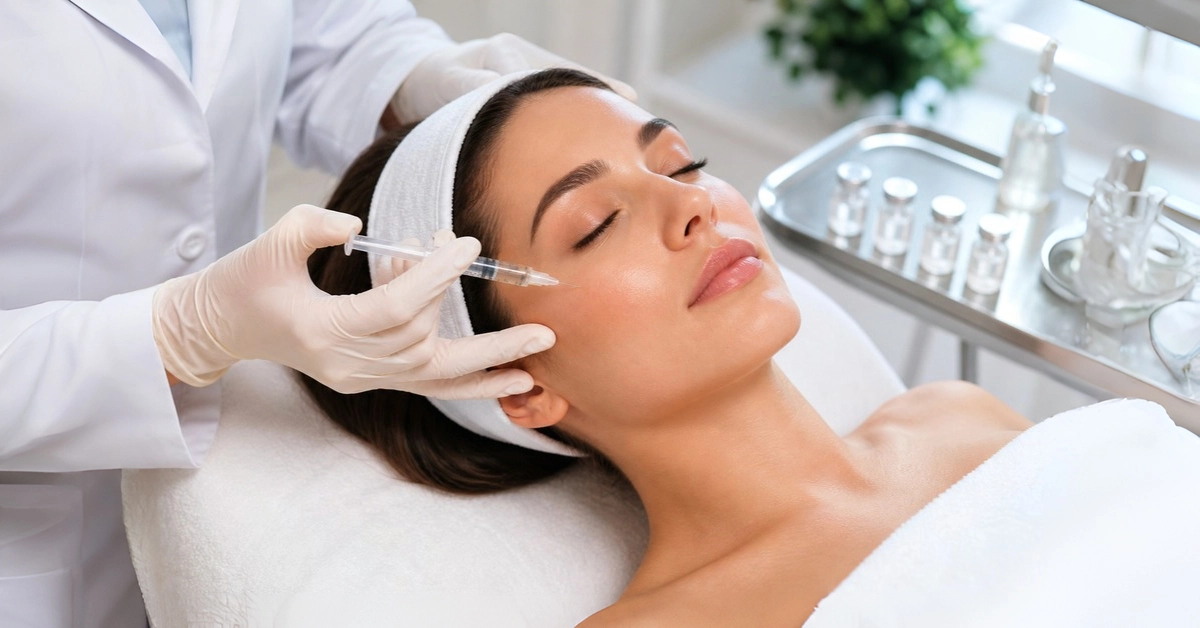
To understand how exosome therapy works, you have to understand what goes on in a typical session. In terms of patient experience, it is a simple process to perform the exosome facial procedure that takes about 20 to 30 minutes. The first step is to cleanse the skin thoroughly and evaluate it for maximum absorption. Then a cooling gel mask rich in exosomes is applied to the treatment area, delivering its concentration of growth factors, peptides, hydrating agents and soothing botanicals directly to the skin.
The mask is left on for 10 to 20 minutes so that the exosomes can penetrate the skin and begin to activate cellular repair in depth. This uptake phase is not passive, with the exosomes actively interacting with skin cells, triggering signaling pathways that support collagen synthesis, barrier recovery and control of inflammation. The treatment ends with a gentle massage to aid absorption and a hydrating serum or cream to lock in the treatment and support the skin through its initial renewal response.
When applied following a procedure like microneedling, laser or a chemical peel, the microchannels created by the initial treatment allow the exosomes to penetrate much deeper, boosting the repair response and significantly reducing the inflammation and sensitivity that often follows these procedures. In this application, the exosome facial procedure becomes as much a recovery tool as it is a standalone treatment.
Who Is this Treatment For
Exosome skin treatment is well suited to a broad spectrum of skin problems and patient types. The biggest winners are those seeking quicker healing and reduced downtime following cosmetic procedures, those with persistent redness or sensitivity that hasn’t responded well to other treatments, and anyone whose skin has gradually worsened — looking duller, less even, or more tired despite continued effort.
Exosome Therapy for skin rejuvenation is also relevant for those in their 30s and 40s who notice that the skin does not bounce back the way it once did, and for those with acne scarring or post-inflammatory marks that have been slow to fade. The treatment is not for people who have active skin infections, acute dermatitis or eczema flare ups, open wounds or known sensitivity to any ingredient in the preparation. Prior to treatment, a proper clinical assessment should be performed to confirm the suitability and individualize the approach.
Benefits that Accumulate Over Time
Exosome anti aging treatment provides both cumulative and immediate benefits. Most patients see less redness, improved hydration and a calmer, more settled skin surface in the days after a session. In the weeks that follow, as cellular repair continues, progressive improvements in texture, tone and overall skin quality are observed.
It helps accelerate healing after procedures, significantly reduces redness and chronic inflammation, leads to a gradual improvement in collagen production and skin firmness, provides deeper and longer-lasting hydration, and results in a brighter, more even complexion over time. These are not just cosmetic effects. They are a sign of real biological activity taking place in the skin, which is why results feel different than a standard facial and tend to hold better between treatments.
Aftercare & Recovery
Another practical benefit of Exosome Therapy for skin rejuvenation is the minimal recovery needed. Most patients develop only a mild flush to the skin immediately after treatment which resolves within a few hours. There is little to no downtime and most people return to their normal activities the same day. In the hours following the session, do not rub or wash the face, let the skin continue absorbing the treatment undisturbed. Support healing with a gentle moisturiser. Spacing regular sessions at appropriate intervals provides the best results and allows the benefits to accrue in a meaningful way over time.
Conclusion
If your skin is slow to recover, quick to react or just not performing like it used to, it may be time to consider a treatment that works at the level where the problem actually begins. The first step in making that decision with confidence is to understand what is exosome therapy for skin. This is not a new layer on top of the skin – this is a clinically-guided regenerative skin treatment that replaces what time has taken from the skin’s own repair system.
The exosome skin treatment at Medlounges is done under the supervision of experienced aesthetic physicians who assess each patient on an individual basis and build a plan based on their skin condition and goals. With the right approach and regular sessions, it is not only possible to achieve healthier, more resilient and genuinely glowing skin — it is sustainable.
The First Step to Your Skin Consultation
A consultation is not just an appointment. You can learn more about your skin, ask the questions you’ve been thinking about, and get advice that is really specific to your needs, not a standard package.
Ready to take that first step? Book your skin consultation at Medlounges, Kochi / Thiruvalla today.
Medical Disclaimer: This article is for informational purposes only and does not constitute medical advice. Readers should consult a qualified aesthetic physician or dermatologist before undergoing any cosmetic or dermatological procedure.
Frequently Asked Questions
What Is Exosome Therapy for Skin?
Exosome therapy delivers lab-derived exosomes, tiny vesicles carrying proteins and growth factors, directly into the skin to repair cell-to-cell communication. Unlike topical products, it works inside the living layers of skin rather than sitting on the surface. This signals cells to repair, regenerate, and produce collagen.
- Exosomes are 30-150 nanometre vesicles naturally produced by stem cells
- They carry peptides, growth factors, antioxidants, and genetic material
- Targets a cellular communication problem topical skincare can’t reach
What Happens During an Exosome Facial Treatment?
A session takes about 20-30 minutes and starts with cleansing and skin evaluation. An exosome-rich cooling gel mask is applied and left on for 10-20 minutes to let the exosomes penetrate and activate cellular repair. The treatment ends with a massage and a hydrating serum to lock in results.
- The mask actively triggers signaling for collagen synthesis and barrier recovery
- Often paired with microneedling, laser, or peels for deeper penetration
- A gentle massage and hydrating cream finish each session
Who Should Get Exosome Therapy for Skin?
Exosome therapy suits people recovering from cosmetic procedures, those with persistent redness or sensitivity, and anyone whose skin looks dull despite a consistent routine. It’s especially relevant for people in their 30s and 40s whose skin doesn’t bounce back like it used to.
- Good for acne scarring or post-inflammatory marks that are slow to fade
- Not suitable for active infections, eczema flare-ups, or open wounds
- A clinical assessment beforehand confirms suitability and customizes the approach
What Are the Benefits of Exosome Therapy?
Exosome therapy reduces redness, speeds healing after procedures, and gradually improves collagen production and skin firmness. Most patients notice calmer, more hydrated skin within days, with texture and tone improving over the following weeks. Benefits build cumulatively with regular sessions.
- Accelerates healing and lowers inflammation after laser or peel treatments
- Deepens hydration and evens out skin tone over time
- Results reflect real biological activity, not just a temporary glow
What Is the Recovery Like After Exosome Therapy?
Recovery is minimal, with most patients experiencing only a mild flush that fades within a few hours. There’s little to no downtime, and normal activities can resume the same day. Avoiding rubbing or washing the face for the first few hours helps the skin absorb the treatment fully.
- Mild facial flushing typically resolves within hours of the session
- Avoid washing or rubbing the face right after treatment
- Regular, spaced-out sessions build the best long-term results