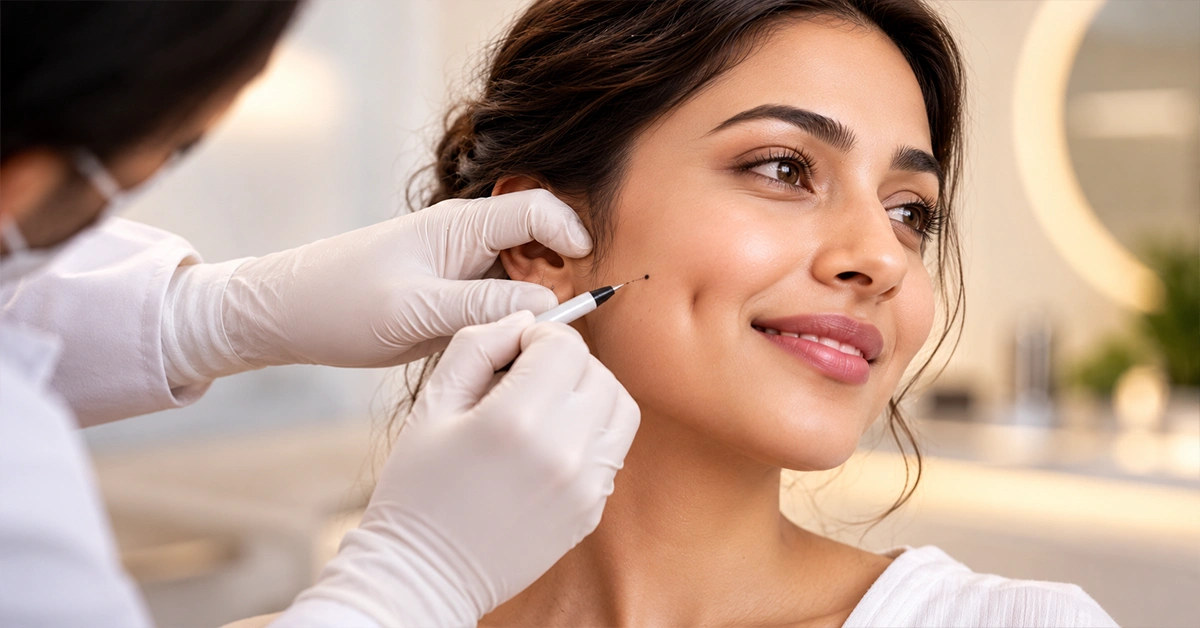
Dimples are small indentations that appear on the cheeks, usually becoming more noticeable when a person smiles. While some people have naturally occurring dimples, others may want to create a similar feature through a cosmetic procedure called dimpleplasty.
Dimpleplasty is a relatively minor facial procedure, but it still involves altering the soft tissues of the cheek. Understanding the dimpleplasty procedure, recovery, possible risks, and expected results can help you make an informed decision.
What Is Dimpleplasty?
Dimpleplasty is a cosmetic surgical procedure used to create dimples on the cheeks. It is generally performed through a small incision inside the mouth, so there is usually no visible external scar.
Natural dimples are associated with variations in the structure of the cheek, including the way the skin and underlying facial muscles connect. During dimple creation surgery, a surgeon creates a controlled connection between the inner cheek tissues and the underside of the skin.
When the cheek muscles move during smiling, this connection can create the characteristic indentation.
Dimpleplasty is usually considered one of the less extensive procedures within Surgical & Aesthetic Procedures, but individual techniques and results can vary.
How Does the Dimpleplasty Procedure Work?
The exact technique depends on the surgeon and the patient’s facial anatomy, but the basic process involves creating an internal attachment that produces the desired indentation.
Planning the dimple
Before the surgery, the surgeon will discuss with you where you want the dimple to be, how deep you want it, and what you want the dimple to look like. Placement is based on facial proportions and the natural smile of the patient.
Local anaesthesia
The area is usually numbed with local anaesthesia. This helps minimize discomfort during the procedure.
Creating the internal attachment
A small incision is made inside the cheek. Through this opening, the surgeon creates a connection between the cheek tissue and the underside of the skin.
Closing the incision
The internal incision is closed, commonly using absorbable sutures. As the area heals, the attachment helps form the dimple.
The procedure is generally short, although the duration can vary depending on the technique and whether one or both cheeks are treated.
Who May Consider Cheek Dimple Surgery?
Cheek dimple surgery may be an option for adults who want to create dimples for cosmetic reasons.
During a consultation, the surgeon may assess:
- Overall health and healing ability
- Facial anatomy and cheek structure
- Skin and soft-tissue characteristics
- Desired dimple location and appearance
- Expectations about the result
Good communication is particularly important because a dimple that looks attractive on one person’s face may not produce the same effect on another.
The aim is generally to create a feature that complements the person’s existing facial proportions.
What Are the Benefits of Dimpleplasty?
The primary benefit of dimpleplasty is the ability to create cheek dimples where they do not naturally occur.
Potential benefits include:
- Creating one or two cheek dimples
- A relatively small treatment area
- No visible external facial incision in commonly used techniques
- A comparatively short procedure
- The ability to plan the position and appearance of the dimples
For someone who has always wanted dimples, this small facial change can alter the appearance of their smile without requiring a major cosmetic operation.
However, expectations should remain realistic. The final appearance depends on facial anatomy, surgical technique, and individual healing.
What Is Dimple Surgery Recovery Like?
Some swelling, bruising, tenderness, or discomfort can occur following the procedure. Since the incision is inside the mouth, careful oral hygiene is particularly important during the early healing period.
Your surgeon may advise you to:
- Keep the mouth and treatment area clean
- Follow any recommended dietary instructions
- Avoid activities that could irritate the surgical area
- Take prescribed medication as directed
- Attend follow-up appointments
The early appearance of the dimples may not represent the final result. Swelling and tissue healing can temporarily make the indentation look deeper or more prominent.
Therefore, dimple surgery recovery involves allowing the tissues enough time to settle before judging the outcome.
What Results Can You Expect?
Immediately after surgery, the dimple may be visible even when the face is relaxed. This can change as swelling decreases and the tissues heal.
Over time, the dimple may become more subtle at rest and more noticeable while smiling. However, the final pattern varies between individuals.
The result can be influenced by:
- Dimple placement
- Surgical technique
- Facial anatomy
- Skin and soft-tissue characteristics
- Individual healing
A surgeon can explain the likely appearance based on your anatomy, but it is not possible to guarantee an exact depth or shape.
Are Permanent Cheek Dimples Possible?
Dimpleplasty is generally intended to create permanent cheek dimples or a long-lasting indentation. However, the final result can change during the healing process.
Some dimples may become less pronounced over time, while others remain clearly visible. In some cases, the appearance may be noticeable even when the face is relaxed.
This is why it is useful to discuss whether you want a subtle dimple that mainly appears when smiling or a more noticeable indentation.
If the result is significantly different from what was expected, revision or adjustment may sometimes be considered. Whether this is appropriate depends on the individual case.
What Are the Risks of Dimpleplasty?
Although dimpleplasty is a relatively small cosmetic procedure, it is still surgery and carries potential risks.
Possible complications include:
- Infection
- Bleeding or bruising
- Swelling and discomfort
- Changes in sensation
- Asymmetry between the cheeks
- A dimple that is too deep or too shallow
- A position or shape that differs from the expected result
- Changes in the appearance of the dimple during healing
- Need for revision surgery
Because the procedure involves the inside of the mouth, following postoperative oral-care instructions is especially important.
A consultation with a qualified surgeon can help you understand the specific technique being considered and its associated risks.
Frequently Asked Questions
Is dimpleplasty painful?
Usually the procedure is performed under local anaesthetic, so you should not experience any significant pain during the surgery. You may have some minor soreness, tenderness, or discomfort as you heal.
How long does dimple surgery recovery take?
Recovery is different for everyone. Swelling and tenderness are typically more pronounced in the early phase of healing and gradually improve. Your surgeon can give you a more specific timeline based on the technique used.
Will dimpleplasty leave a scar?
The commonly used approach places the incision inside the mouth, so there is generally no visible scar on the outside of the cheek.
Can I have dimples on both cheeks?
Yes. Dimpleplasty can be performed on one or both cheeks. The decision depends on the patient’s preference, facial anatomy, and the surgeon’s assessment.
Will my permanent cheek dimples look natural?
How it looks depends on things like where the dimples are placed, surgical technique, and the individual’s healing. Proper planning is important for making dimples that work with the person’s facial features.
Conclusion
Dimpleplasty is a procedure that can be performed on those who wish to change the appearance of their smile and create cheek dimples. Dimple creation surgery can be done with a small incision inside the mouth and attachment of the tissue in a way that the indentation will be enhanced when the face moves.
Although the procedure itself is relatively small, the outcome depends on individual anatomy and healing. Understanding the dimpleplasty procedure, potential risks, recovery, and realistic expectations is an important part of deciding whether this treatment is suitable for you.
The First Step to Your Consultation
If you are thinking about cheek dimple surgery, a consultation with a qualified specialist can help you understand your facial anatomy, the techniques available, and the type of result you may realistically expect.
Ready to understand your options? Book your consultation at Medlounges, Kochi / Thiruvalla today.
Medical Disclaimer: This article is intended for general educational purposes only and should not be considered a substitute for professional medical advice, diagnosis, or treatment. Individual suitability, surgical techniques, recovery, and results can vary. Always consult a qualified medical professional for personalised advice before undergoing any cosmetic procedure.