As we age, or sometimes after significant weight changes, certain areas of the face and body can lose volume. This can affect facial contours, create hollows, or change the overall appearance of an area.
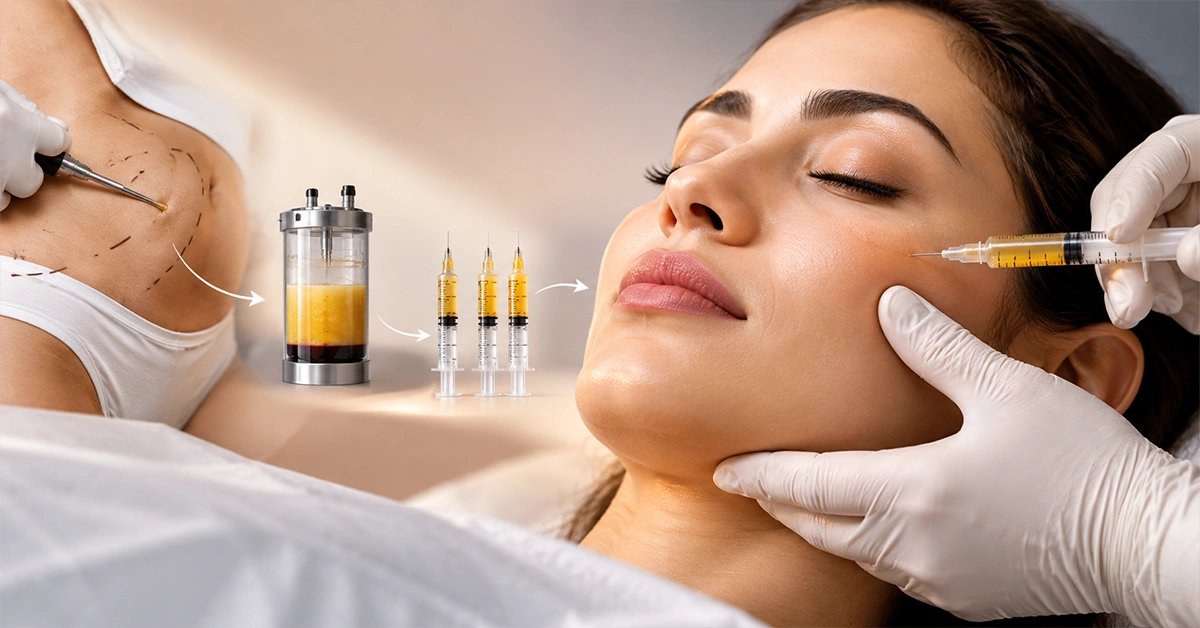
Fat grafting, also known as fat transfer or autologous fat transfer, is a surgical procedure in which a person’s own fat is used to restore or add volume to another area of the body. Fat is usually removed by liposuction, processed, and carefully injected into the area being treated.
But how does fat transfer work, who may be suitable for it, and how long do the results last?
What Is Fat Grafting?
Fat grafting involves moving fat from one area of the body to another.
The procedure generally involves three stages:
- Fat harvesting: Fat is removed from a donor area, such as the abdomen, hips, or thighs, using liposuction.
- Fat processing: The collected fat is processed to separate it from unwanted fluids and other materials.
- Fat injection: The prepared fat is carefully injected into the area where additional volume is required.
Because the transferred tissue comes from the patient’s own body, fat grafting is also known as autologous fat transfer.
At Medlounges, patients can explore available body contouring treatments and discuss their goals with the medical team to understand which options may be appropriate.
Where Can Fat Transfer Be Used?
Fat transfer can be used for different aesthetic and reconstructive purposes. The exact application depends on the patient’s concerns, medical history, and the surgeon’s assessment.
Facial Fat Grafting
Facial fat grafting can be used to restore volume in areas affected by age-related volume loss. Depending on the individual’s needs, it may be considered for areas such as the cheeks, temples, lips, or under-eye region.
It can also be incorporated into other facial procedures, including facelift or eyelid surgery, when appropriate.
The treatment plan depends on the area being treated, the amount of volume required, and the patient’s facial anatomy.
Body Fat Transfer
Fat can also be transferred to selected areas of the body to alter shape or restore volume. Breast enhancement and correction of certain contour irregularities are examples of its applications.
Fat transfer can also have a reconstructive role in selected cases. The appropriate technique and expected outcome depend on the treatment area and individual clinical assessment.
Who May Be Suitable for Fat Grafting?
Fat transfer is not suitable for everyone.
A person may be considered for the procedure if they:
- Are in generally good health.
- Have enough donor fat available.
- Have realistic expectations about the outcome.
- Are close to a stable, healthy weight.
- Do not smoke or are able to stop smoking as advised by their medical team.
The amount of available donor fat can be particularly important. Since some of the transferred fat may not survive after transplantation, having sufficient donor tissue may influence whether the procedure is appropriate.
A consultation is necessary to assess the area being treated, available donor sites, overall health, and expected outcome. Patients can also explore liposuction in Kerala to understand the fat-removal procedure that may be involved in harvesting fat for transfer.
What Happens During a Fat Transfer Procedure?
The procedure begins with identifying an appropriate donor area.
Fat is removed using liposuction through small incisions. The collected tissue is then processed before being transferred.
The surgeon injects the prepared fat in small amounts and into carefully selected tissue planes. This allows the surgeon to build volume gradually and shape the treated area.
The exact procedure time and anaesthesia used depend on the area being treated and whether fat grafting is being performed alongside another procedure.
For an overview of how liposuction is used to address selected areas of the body, read liposuction for the tummy, arms, and thighs.
What Are the Benefits of Fat Grafting?
One of the main features of fat transfer is that it uses the patient’s own tissue.
Potential benefits include:
- Restoring lost volume.
- Improving contours.
- Creating a natural-feeling result in suitable cases.
- Treating more than one area during the same procedure, when appropriate.
- Using fat harvested from another part of the body.
For facial applications, fat may provide volume in areas where ageing has caused hollowness or loss of fullness.
However, fat grafting is not a weight-loss treatment. The amount of fat removed during harvesting is generally planned according to the treatment requirements and the patient’s suitability.
The benefits and limitations should be discussed with a qualified medical professional before deciding on treatment.
What Results Can You Expect?
The appearance immediately after fat transfer does not represent the final result.
Swelling can make the treated area look fuller than expected during the early recovery period. Over time, some of the transferred fat is naturally absorbed by the body.
The amount of fat that survives varies between individuals and treatment areas. This means the final volume cannot always be predicted precisely.
For example, the American Society of Plastic Surgeons’ guide to fat transfer explains how fat harvested from another part of the body can be used for breast enhancement and notes that some transferred fat may not remain in the treated area.
In some cases, more than one session may be needed to achieve the desired volume. The need for additional treatment depends on the initial result, the amount of surviving fat, and the patient’s goals.
Fat Grafting Recovery
Recovery depends on where the fat is harvested and where it is transferred.
Swelling, bruising, and tenderness can occur in both the donor and treated areas. These effects usually improve gradually, although some swelling can persist for several weeks or longer, depending on the procedure.
Your surgeon may recommend:
- Keeping pressure off the treated area where necessary.
- Following wound-care instructions.
- Wearing compression garments on the donor area when indicated.
- Avoiding vigorous activity for the recommended period.
- Attending scheduled follow-up appointments.
Recovery is different for every procedure, so your surgeon’s individual instructions should take priority over general recovery advice.
If fat transfer is combined with another procedure, recovery may also depend on that additional treatment.
Are There Risks With Fat Transfer?
Like any surgical procedure, fat grafting has potential risks.
These can include:
- Bleeding.
- Infection.
- Swelling and bruising.
- Fat necrosis or loss of some transferred fat.
- Irregularities or asymmetry.
- Scarring.
- Fluid collection.
- Fat embolism, a rare but serious complication.
The risks can vary according to the area being treated, the technique used, and individual health factors. A detailed consultation is important to understand the potential complications associated with your specific procedure.
Patients should discuss the surgeon’s qualifications, the treatment setting, the proposed technique, and postoperative care before making a decision.
How Long Do Fat Transfer Results Last?
The results can be long-lasting because fat cells that successfully establish a blood supply and survive may remain in the treated area.
However, not all transferred fat survives, and the outcome depends on factors including the treatment area, technique, and individual healing response. Changes in body weight can also affect the transferred fat over time.
This is why the result is generally assessed after the initial swelling has settled and the transferred tissue has stabilised.
Maintaining a relatively stable weight and following the medical team’s aftercare instructions may help support the long-term outcome. Nevertheless, individual results cannot be guaranteed.
Frequently Asked Questions
Is fat grafting the same as fat transfer?
Yes. Fat grafting, fat transfer, fat injections, and autologous fat transfer are different terms used to describe the technique of moving a person’s own fat to another area.
Does all transferred fat survive?
No. A proportion of transferred fat is naturally absorbed by the body. The amount that survives varies from person to person and depends on factors such as the treatment area and technique.
Can fat transfer be used for facial rejuvenation?
Yes. Facial fat grafting can restore volume in areas such as the cheeks, temples, lips, and under-eye region when appropriate. A medical assessment helps determine whether the procedure suits the patient’s anatomy and goals.
Is fat grafting a weight-loss procedure?
No. Fat transfer is intended to restore or add volume and is not a substitute for weight-loss treatment. Fat harvesting may involve liposuction, but the procedure is planned around the desired contouring outcome rather than general weight reduction.
How long does recovery take?
Recovery depends on the amount of fat harvested, the area treated, and whether other procedures are performed at the same time. Swelling and bruising may last a few weeks, while the final result can take longer to assess.
Conclusion
Fat grafting uses a person’s own fat to restore or add volume to another area of the body. It can be used for facial rejuvenation, body contouring, and selected reconstructive applications.
The procedure involves more than simply injecting fat. The outcome is affected by careful harvesting, processing, placement, and aftercare. The final result is not immediately predictable because some of the transferred fat is naturally absorbed, so changes develop gradually.
Understanding the benefits, limitations, risks, and recovery requirements can help patients make informed decisions about whether fat transfer is appropriate for their needs.
The First Step to Your Consultation
If you are considering fat grafting, a consultation can help determine whether the procedure is appropriate for your concerns, available donor sites, and desired outcome.
Ready to understand your options? Book a consultation at Medlounges Kochi or Thiruvalla to discuss your goals and receive an individual assessment.
Medical Disclaimer: This article is for general information purposes only and should not be considered a substitute for professional medical advice, diagnosis, or treatment. Suitability, technique, risks, recovery, and expected results vary between individuals. Each patient should be evaluated by a qualified medical professional before treatment.