Hair loss can be frustrating, especially when thinning becomes noticeable in photographs, while styling your hair, or even during everyday conversations. If you have been considering a Hair Transplant in Kerala, you may already have questions about whether you are a suitable candidate, how the procedure works, how long recovery takes, and what kind of result you can realistically expect.
A hair transplant is not just moving hair from one part of the scalp to another. The process involves assessing your pattern of hair loss, availability of donor hair, your scalp condition, and your long term expectations. If you know these things, you can go into treatment with more realistic expectations.
What Is a Hair Transplant?
A hair transplant is a surgical procedure that redistributes hair follicles from a donor area of the scalp to areas where hair density has reduced.
The donor area is commonly located toward the back or sides of the scalp because these follicles are generally more resistant to the effects of androgen-related hair loss. The transplanted follicles are positioned according to the patient’s existing hairline, density, and facial proportions.
The objective is not simply to increase the number of hairs. Proper placement and angulation are important for creating a natural-looking appearance.
For more information about the procedure and treatment approach, you can learn more about hair transplantation at Medlounges.
Why Do People Consider Hair Transplantation?
Hair loss can occur for several reasons, including androgenetic alopecia, certain medical conditions, hormonal changes, and genetic factors. For patients with permanent pattern hair loss and sufficient donor hair, transplantation may provide a way to restore density in selected areas.
However, not every type of hair loss is automatically suitable for transplantation. A medical assessment is important to identify the underlying pattern before planning surgery.
Who Is a Suitable Candidate?
A hair transplant treatment in Kerala candidate is generally someone with a stable or clearly established pattern of hair loss and sufficient healthy donor follicles.
The doctor may assess:
- Hair loss pattern and progression
- Donor hair density
- Scalp health and existing scalp conditions
- Hair texture, thickness, and characteristics
- Age and expected future hair loss
- Medical history and medications
- Expectations regarding density and coverage
Patients with active scalp conditions or insufficient donor hair may require treatment or further evaluation before transplantation is considered.
If you are specifically concerned about a receding hairline, understanding the causes and treatment considerations can be helpful before deciding whether transplantation is appropriate. Read more about hair transplant for a receding hairline.
What Happens During a Hair Transplant?
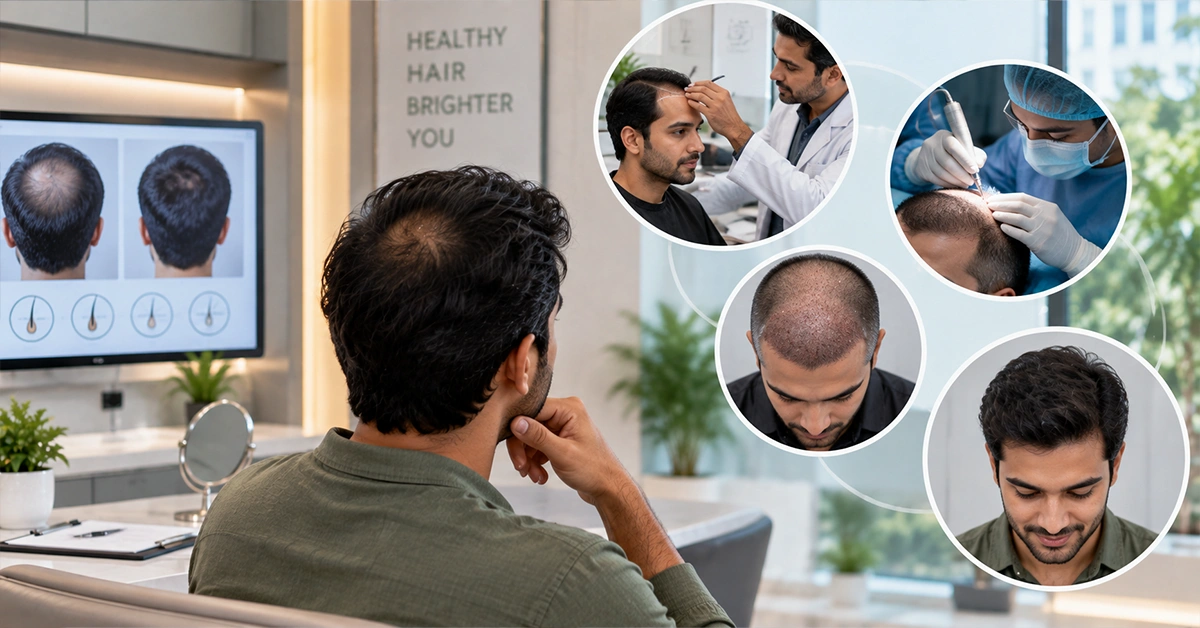
The hair transplant surgery process in Kerala begins with planning the recipient area and determining how the available donor follicles should be distributed.
Depending on the technique used, individual follicular units may be harvested from the donor area and prepared for transplantation. Tiny recipient sites are then created in the areas requiring increased density.
The follicles are meticulously implanted to match the natural direction and angle of the existing hair. The design of the hairline is very important because if the hairline is too straight or too dense, it may not look natural when it matures.
Understanding FUE Hair Transplantation
Follicular Unit Extraction (FUE) is a method of harvesting individual follicular units from the donor area, as opposed to removing a continuous strip of scalp tissue. The harvested grafts are then prepared and placed into the recipient area.
The number of grafts to be used depends on the extent of hair loss, available donor follicles, hair characteristics, and the desired level of coverage. More grafts do not automatically mean a better result because donor resources are limited.
How Long Does the Procedure Take?
The duration depends on the number of grafts being transplanted and the complexity of the case. Smaller procedures may take less time, while larger sessions can require several hours.
The doctor should explain the expected duration during your consultation based on the planned number of grafts and treatment areas.
What Is Recovery Like?
Recovery after hair restoration in Kerala is gradual. Mild swelling, redness, sensitivity, or small crusts may occur during the early period.
Patients receive specific instructions regarding scalp washing, physical activity, sleeping position, and protection of the transplanted area.
It is important not to judge the final result during the first few weeks. The transplanted hairs commonly shed initially, which can be concerning if you are not expecting it.
For a more detailed understanding of the healing stages, see our guide to the hair transplant recovery timeline.
When Will New Hair Growth Start?
Hair growth after transplantation does not happen immediately.
The transplanted follicles require time to transition through their natural growth cycle. New growth generally becomes more noticeable over the following months, with further maturation occurring gradually.
The final appearance can therefore take many months to develop. Individual results vary according to follicle characteristics, treatment area, healing, and the underlying cause of hair loss.
You can also learn more about the different stages and expectations in our guide to hair growth after a hair transplant.
Will a Hair Transplant Stop Future Hair Loss?
A hair transplant relocates existing follicles and does not necessarily inhibit the thinning of untreated hair.
This is important to think about when planning for long-term treatment. In some patients, medical therapy for ongoing pattern hair loss may be needed in addition to transplantation.
Your doctor can investigate whether additional treatment is appropriate based on the cause and progression of your hair loss.
How Do You Choose a Hair Transplant Clinic?
When comparing a hair transplant clinic in Kerala, look beyond advertisements and package prices. Consider the qualifications and experience of the doctor, the clinical facility, consultation process, surgical technique, infection-control standards, and postoperative follow-up.
You can also read our detailed guide on how to choose a hair transplant clinic in Kerala before scheduling a consultation.
Ask:
- Who will perform the procedure?
- How will the donor area be assessed and managed?
- How are graft numbers determined?
- What technique is recommended and why?
- What postoperative care is provided?
- Who should you contact if you have concerns during recovery?
A good consultation should explain limitations as well as expected benefits.
Expert Insights
At Medlounges, hair transplantation starts with a personal evaluation and not with a fixed number of grafts or treatment packages. The patient’s hair loss pattern, donor density, scalp condition, facial proportions, and expectations are considered before discussing the appropriate approach.
For anyone researching Hair Transplant in Kerala, the important decision is not simply where the procedure is available, but whether the proposed treatment is medically appropriate, realistically planned, and supported by proper follow up care.
Conclusion
A Hair Transplant in Kerala can be an option for selected patients experiencing permanent hair loss, but the procedure needs to be planned around the patient’s donor supply, hair-loss pattern, and long-term expectations.
Understanding the procedure, recovery, and limitations before treatment can help you make a more informed decision and avoid unrealistic expectations about immediate results.
The First Step to Your Consultation
The right treatment begins with understanding the cause and pattern of your hair loss.
Ready to discuss your options? Book your consultation at Medlounges, Kochi / Thiruvalla today.
Medical Disclaimer
This article is for informational purposes only and does not constitute medical advice. Readers should consult a qualified dermatologist, plastic surgeon, or appropriately trained medical professional before undergoing hair transplantation.
Frequently Asked Questions
Is hair transplantation permanent?
The follicles are normally harvested from areas less likely to be affected by pattern baldness. However, surrounding untreated hair may continue to thin, so long-term management may still be necessary.
How long does hair transplant recovery take?
The initial recovery time is typically a few days to a few weeks, and visible hair growth takes a few months. Your recovery will depend on the procedure and how your body heals.
Does a hair transplant hurt?
The procedure is performed using anaesthesia to minimise discomfort. Some tenderness, tightness, or sensitivity can occur after the procedure and should be managed according to the doctor’s instructions.
How many grafts will I need?
There is no standard number. Graft requirements depend on the degree of hair loss, donor density, hair characteristics, and the amount of coverage required.
Can women undergo hair transplantation?
Yes, selected women with appropriate causes and patterns of hair loss may be candidates. The underlying reason for hair loss should be evaluated before considering surgery.