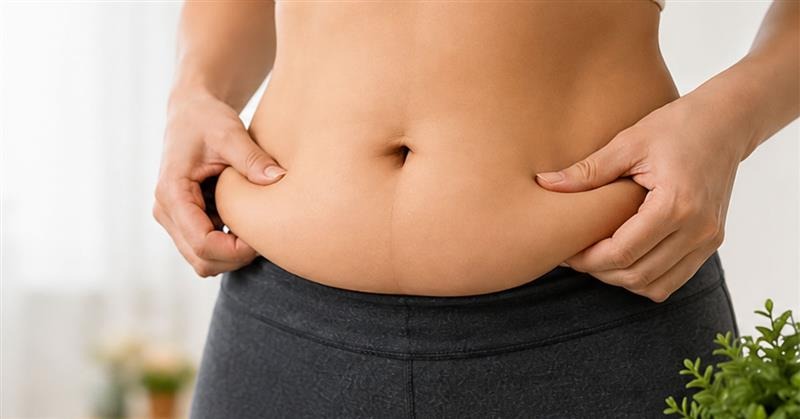
You have been faithful. The workouts come regularly. The diet has been regulated. The scale has shifted. And still there are those parts — the lower belly, the flanks, the inner thighs, the upper arms — that seem to live in a whole other universe. The frustration runs deeper than the physical look. It is the quiet disappointment of effort not yielding results where it matters to you.
But it’s more complex than that.
It’s not a question of discipline or willpower; it’s about understanding why stubborn fat won’t go away despite genuine effort. It’s about biology.
Fat loss is not universal
The human body does not lose fat uniformly in all areas, which is one of the most important things to understand about how body composition really works. When you lose weight, the body draws on fat stores in a pattern largely determined by genetics, hormones, age, and individual metabolism — not by where you want the fat to go away first.
Certain areas of the body are naturally designed to hold onto fat more tightly than others. Typical trouble spots for body fat resistance are the lower abdomen, hips, thighs, upper arms, and flanks, because the fat cells in these areas have different receptor sensitivity, blood flow, and hormonal responsiveness than the rest of the body.
Also Read: Liposuction for Tummy, Flanks, Arms and Thighs: Procedure, Benefits and Recovery
We infer from the above information that two people following the same diet and exercise routines may see completely different results in different areas of the body. Some people may easily burn fat from the face and upper body, but not from the lower abdomen. Another could see the opposite trend. This variation is not a failure; it is physiology.
Hormones and Genetics
Hormonal fat accumulation is one of the main reasons why some areas are resistant to change despite great effort. Cortisol is the stress hormone, and it tends to drive fat storage in the abdominal region. Insulin resistance influences the distribution and availability of fat. Estrogen swings influence where women tend to store fat, usually in the hips, thighs, and lower abdomen. Testosterone levels influence patterns of male fat distribution, particularly around the midsection.
Read More: HD Liposuction – The Six-Pack You’ve Worked For, Finally Visible
Age makes this more difficult. As you age, your metabolism naturally slows, making it easier to gain fat and harder to lose it—especially around your lower abdomen, thighs, and arms, areas that are genetically predisposed to storing fat.
Genetics also determines the number of fat cells in different areas of the body. People who are born with more fat cells in the lower abdomen always have that tissue to expand or contract, and it will contract more slowly and reluctantly than fat in other areas.
Typical Triggers That Make Stubborn Fat Worse
Several factors are always at play as to why some fat deposits prove to be resistant:
- Cortisol and dysregulation of appetite from chronic stress and poor sleep quality
- “Insulin resistance or metabolic dysfunction hindering the mobilization of fat.”
- Hormonal changes from aging, menopause, or hormonal medications
- Metabolic adaptation and reduction induced by long-term calorie restriction
- Not enough strength training to retain muscle mass while losing fat
- Metabolism and circulation to subcutaneous fat decline with age
- Each of these factors dictates not only how much fat is lost but also from which parts of the body it is pulled, and stubborn areas are often the last to respond.
Why Fat Won’t Disappear After Exercise
Many people wonder why fat doesn’t go away after exercise, even when they work out consistently and with intensity. The answer lies in knowing what exercise does and does not do.
Exercise improves body composition, cardiovascular health, and overall metabolic function. But it won’t selectively burn fat from a particular area — the myth of spot reduction has long since been debunked. Hundreds of abdominal exercises do not make the fat covering the abdominal muscles disappear preferentially from that region. The body pulls energy from fat stores based on hormonal signaling and genetics, not on which muscles are being worked.
The fact that fat won’t disappear after exercise is deeply frustrating for many because the effort is real, the results in terms of fitness are real, but the visible contour change in the stubborn area remains minimal.
When Diet and Exercise Fail
So when we’re trying to figure out why diet and exercise not working in certain areas of the body, we have to recognize that genetics and physiology set limits on what diet and exercise alone can achieve. This is not pessimism—it is realism.
Long-term dieting induces metabolic adaptation. So the body gets much better at conserving energy. So then it takes longer to lose more fat. The same exercise routine results in similar changes in the body. What worked brilliantly in the first three months returns diminishing dividends by month nine.
Additionally, fat loss plateau reasons are often related to factors outside of simple calorie balance. The scale may not show fat loss due to muscle gain. Water retention due to inflammation or hormonal changes can make it hard to see the fat loss. Some areas can stall in progress while the rest of the body gets better. This can be caused by sleep deprivation, stress, and hormonal fluctuations.
The Truth About Stubborn Fat
You don’t hear much about the emotional toll of stubborn fat in the fitness world. Many become very self-critical and think that they don’t have the self-discipline or willpower. The truth is, they might be doing everything right and still run into biological resistance that they can’t beat, no matter how hard they try.
This is not a weakness. This is anatomy. It’s often psychologically healthier to accept that some areas of the body are genetically predisposed to hold fat, and that this is normal, rather than chasing a result that may not be achievable through lifestyle changes alone.
Medical Body Shaping Options
If you’ve lost weight in a meaningful way, maintained your healthy habits, and are still frustrated by fat deposits that won’t budge, Liposuction for stubborn fat can provide a targeted, medically supervised approach to body contouring.
Liposuction is not just a weight-loss surgery. It is a body-sculpting procedure that removes localized fat deposits that have been resistant to diet and exercise. It works particularly well for people who are already quite fit but want to improve the contours of specific areas that are genetically predisposed to store fat.
Also Read: How to Remove Underarm Fat Permanently: Cost, Procedure, Recovery & Results in India
The procedure targets the actual fat cells in problem areas, surgically removing them so that the body cannot expand that tissue again. This is very different from shrinking cells through a calorie deficit; it removes the tissue altogether.
Recovery may include some swelling and use of compression garments, but results develop over several months as the body heals and tissues settle. This is an option for those who have been leading a healthy lifestyle for years but are still frustrated by localized fat and seeking a different avenue to achieve the curves they want.
Conclusion
Stubborn fat is not a failure. This is an indication that your body has protected certain areas through genetics from mobilization – and that traditional methods, though important for general health, have hit their natural boundaries in those particular areas.
For many, embracing this reality – and the pursuit of lifestyle optimization and, where appropriate, professional body contouring – allows them to move on rather than be stuck in a cycle of effort without tangible benefit.
At Medlounges, body contouring consultations are conducted by experienced aesthetic physicians who assess each patient individually – evaluating their anatomy, fitness level, body goals, and realistic options before recommending any procedure. The discussion is not about perfection. It’s about feeling comfortable and confident in the body you have earned through your efforts.
Ready to Find Your Options?
A consultation is not just an appointment. It is an opportunity to learn the specific rhythms of your body, to pose the questions you’ve been carrying around, and to get advice that is truly personalized to you.
Are you ready to take that first step? Reserve your consultation at Medlounges, Kochi/Thiruvalla today.
Medical Disclaimer: This article is for informational purposes only and is not intended as medical advice. Readers are advised to consult a qualified cosmetic surgeon or aesthetic physician before undergoing any surgical or body contouring procedure.
Frequently Asked Questions
Why does stubborn fat remain after diet and exercise?
Stubborn fat can remain because genetics, hormones, age, fat distribution, and individual body composition influence where the body stores fat. Even with a healthy lifestyle, some localized fat deposits may be resistant to further reduction.
- Fat distribution varies between individuals.
- Genetics can influence fat storage.
- Diet and exercise remain important for overall health.
Can exercise remove stubborn fat from specific areas?
Exercise can strengthen and tone muscles but cannot reliably target fat loss from one specific body area. Overall fat reduction occurs according to individual biology, which is why some localized deposits may remain despite regular exercise.
- Spot reduction is limited.
- Strength training improves muscle definition.
- Healthy nutrition supports body composition.
What areas commonly develop stubborn fat?
Stubborn fat commonly appears around areas such as the abdomen, waist, hips, thighs, arms, and back. The pattern varies between individuals and can be influenced by genetics, age, hormones, and lifestyle.
- Abdomen and waist are common areas.
- Thighs and arms may also retain fat.
- Individual fat distribution differs.
Is liposuction suitable for stubborn fat?
Liposuction may be suitable for healthy adults with localized fat deposits that remain despite appropriate diet and exercise. It removes targeted fat to improve body contours but is not intended to replace weight management or regular physical activity.
- Designed for body contouring.
- Not a treatment for obesity.
- Suitability requires medical assessment.
Can stubborn fat return after liposuction?
Fat cells removed during liposuction do not grow back, but remaining fat cells can enlarge with significant weight gain. Maintaining a stable weight and healthy lifestyle helps preserve the contour achieved after treatment.
- Weight stability supports long-term results.
- Healthy eating remains important.
- Exercise helps maintain body composition.