Ayurveda says that most chronic physical discomfort is caused by an irritated Vata dosha, which controls movement, nerves, and joints. An imbalance of Vata causes dryness, stiffness, and pain in muscles and joints. Ayurvedic massage for pain reduction corrects this imbalance in the following manner:
1. Herbal Oils to Penetrate Deep Tissues.
Apply warm oil and massage the affected regions with medicated oils like Mahanarayan, Sesame, and Dhanwantharam oil. These oils consist of botanicals that have anti-inflammatory and analgesic qualities and hence can reduce pain at the cellular level.
2. Better circulation.
The rhythmic strokes used in Ayurvedic massage increase blood flow to the affected muscles and joints. The enhanced circulation delivers more oxygen and nutrients to the tissues, thereby accelerating the healing process and removing toxins (Ama) that cause pain and inflammation.
Also Read: What Is Ayurvedic Treatment for Stress and Anxiety and How Does It Help?
3. Release of Muscular Tension
Specific pressure techniques are applied to knots and tight muscle fibres, progressively releasing accumulated tension, which is particularly beneficial if you suffer from persistent back pain, neck stiffness, or tight shoulders from stress or bad posture.
4. Calming of the nervous system.
Ayurvedic Massage is not only good for the physical body, but also relaxes the nervous system. That helps the body break the cycle of chronic pain that stress and worry often fuel, reducing the sense of pain in the body.
5. Balance of Tridosha.
Since Ayurveda sees pain as a Vata condition, therapies are aimed at restoring Vata to balance with warm oils, steady strokes, and grounding techniques to bring the body back to its natural state of harmony.
Read More: What Is Cooling Therapy for Eyes Ayurveda and What Are Its Benefits?
Ayurvedic Massage Techniques For Body Pain
There isn’t a universally applicable response. Depending on the type of pain and its location, Ayurvedic practitioners use various remedies.
Abhyanga is a full-body oil massage that increases circulation and reduces general pains and weariness.
Pizhichil – Mild massage with warm oil all over the body to cure joint pain and arthritis.
Kati Basti: It is a specific technique in which hot medicated oil is administered on the lower back through a ring of dough; it is highly effective for persistent lower back pain.
Janu Basti – Similar to Kati Basti, but for knees, mainly for knee discomfort and osteoarthritis.
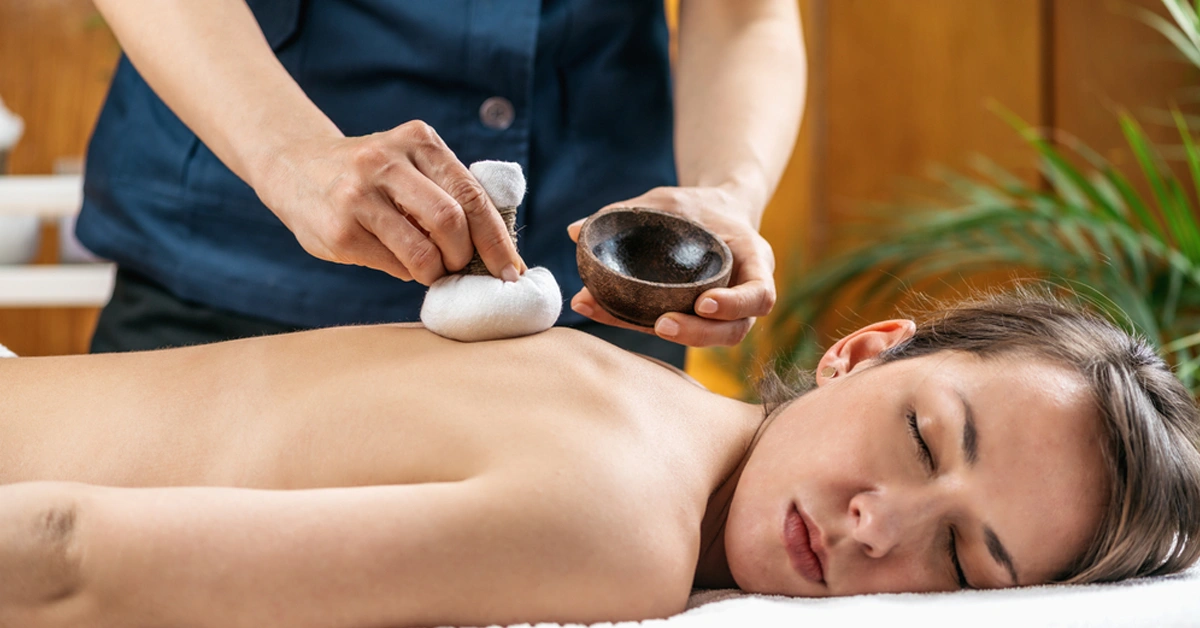
Elakizhi (Herbal Poultice Massage) – The body is massaged with a hot poultice of herbs to relieve muscle stiffness and irritation.
All of them are some form of herbal massage for pain, which is targeted towards a specific site of pain, utilising natural plant-based chemicals instead of synthetic pharmaceutical ingredients.
Benefits of Ayurvedic Massage for Muscle and Joint Pains
Ayurvedic massage for muscular aches and pains is more than simply pain alleviation.
- It reduces inflammation and swelling of joints and muscles.
- Improves flexibility and mobility.
- Helps to ease stiffness from arthritis, spondylitis, or sciatica.
- Aids recovery from muscle strains and overuse injuries.
- It relaxes the nervous system and promotes better sleep.
- Lymphatic drainage and detoxification of the body.
- Relieves muscular tightness caused by stress.
It gives lasting relief, not just temporary pain alleviation.Ayurvedic massage is often recommended as part of a holistic strategy to pain care in Ayurveda, which may also involve dietary changes, herbal supplements, and lifestyle modifications.
Who all may benefit from Ayurvedic massages?
The Ayurvedic massage is suitable for a broad spectrum of persons who are experiencing:
- Chronic back and neck pain.
- Stiffness and joint arthritis.
- Sciatica & Nerve Pain
- Muscular tiredness after physical activity or sedentary work.
- Sports injuries and post-exercise pain
- Stress puts a load on your body.
- General tiredness and lack of energy.
However, people suffering from certain skin conditions, fever, or having undergone recent surgery should visit an Ayurvedic practitioner before starting treatment.
What to Expect During an Ayurvedic Massage Session.
A typical session will begin with a consultation in which the therapist examines your dosha and pain level. Then the whole body or the problematic area is massaged with lengthy, rhythmic strokes using warm herbal oil suited to your constitution. Sessions are usually 45 minutes to an hour with a short break time for the oils to be properly absorbed. Many people experience rapid relief of muscle tension as well as a deep state of relaxation.
Final Thoughts
Ayurvedic massage is a natural and time-proven therapeutic option for anyone looking for long-term respite from physical discomfort. It goes to the root of the suffering, not the symptoms. It uses herbal oils, focused activities, and a holistic view of the body. Whether you suffer from chronic back pain, joint stiffness, or daily muscular stress, Ayurvedic massage for body pain is a gentle yet effective technique to promote long-term healing.
Contact a trained practitioner at Medlounges when you’re ready to experience the healing advantages of true Ayurvedic therapy and develop a treatment plan personalized to your body’s unique needs.
The Initial Steps to Wellness
A consultation is an open talk. Make this an opportunity to truly understand your health and its needs, ask the questions that you have been wanting, and receive a plan that is genuinely tailored to your lifestyle to help you with your concerns.
To take your first step. Book your wellness consultation at Medlounges Wellness Hub, Kochi / Thiruvalla today.
Medical Disclaimer: This article is for informational purposes only and does not constitute medical advice. Readers should consult a qualified Ayurvedic practitioner and a certified eye care professional before beginning any structured eye wellness program or Ayurvedic eye therapy.
Frequently Asked Questions
How does Ayurvedic massage relieve pain?
Ayurvedic massage relieves pain through herbal oils and therapeutic techniques. It improves circulation, relaxes muscles, reduces stiffness, and supports the body’s natural healing process.
- Uses warm medicated oils.
- Promotes muscle relaxation.
- Improves blood circulation.
What conditions can Ayurvedic massage help?
Ayurvedic massage may support relief from several conditions. It is commonly used for back pain, neck pain, joint stiffness, muscle tension, stress, and sports-related discomfort.
- Supports overall wellness.
- Often combined with Ayurveda therapies.
- Individual results vary.
How often should you get an Ayurvedic massage?
Massage frequency depends on individual health needs. Some people benefit from weekly sessions, while others receive treatment as part of a personalized Ayurvedic wellness plan.
- Based on symptoms.
- Guided by practitioners.
- Healthy lifestyle enhances results.
Is Ayurvedic massage safe?
Ayurvedic massage is generally safe when performed by trained professionals. A proper consultation helps determine suitable oils and techniques based on your health condition.
- Inform your therapist about medical conditions.
- Avoid treatment during acute infections.
- Follow professional advice.
What oils are used in Ayurvedic massage?
Ayurvedic massage uses medicated herbal oils selected for individual needs. The choice depends on body constitution, symptoms, and treatment goals to support relaxation and pain relief.
- Oils are chosen after assessment.
- Different oils serve different purposes.
- Warm oil improves comfort during therapy.