Scars from acne that last long after the breakouts have stopped. Pores look bigger than they should. Skin that feels rough, dull, or just stuck and doesn’t respond to the things you use every day. A dermatologist in the Department of Aesthetics & Dermatology hears these complaints a lot, and topical therapy alone doesn’t usually fix them. Microneedling treatment helps by activating the skin’s natural collagen repair system through controlled micro-injury, which makes the skin stronger from the inside out
What Is Microneedling?
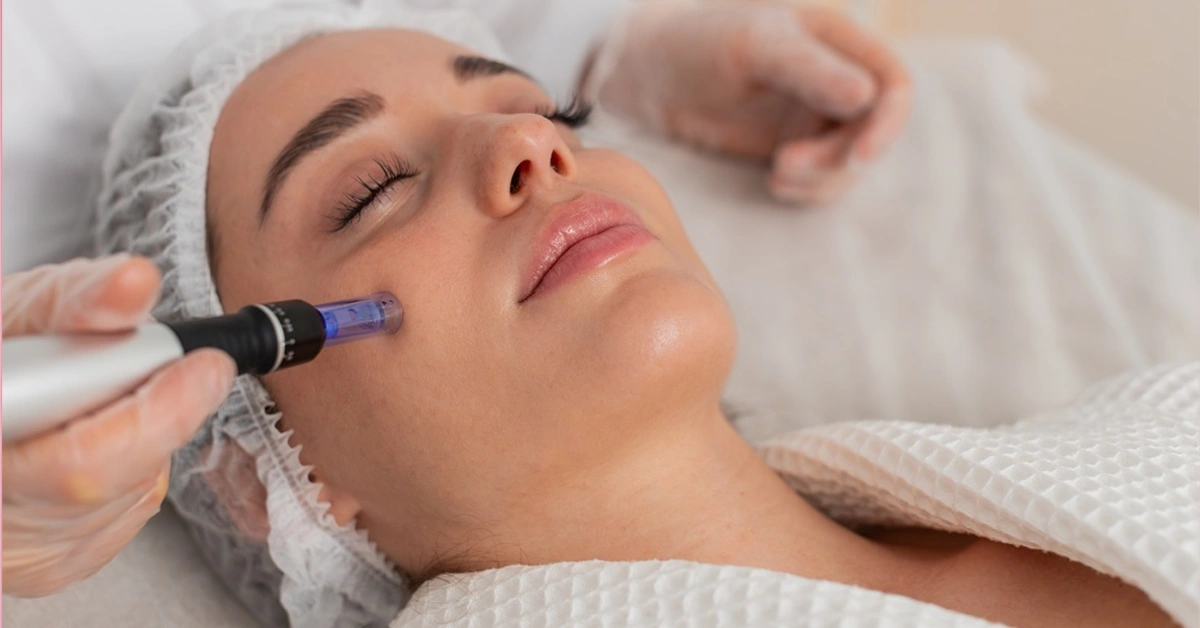
Microneedling is a minimally invasive elective procedure in which a dermatologist or certified aesthetician uses a device with fine, sterile needles to make controlled micro-injuries on the surface of the skin. These tiny channels start the process of healing a wound by activating fibroblasts, which are the cells that make collagen and elastin.
The American Academy of Dermatology calls this method “collagen induction treatment,” and it is an evidence-based way to reduce atrophic scarring and make the skin feel better.
Areas Treated
Dermatologists most often utilize microneedling on the forehead, nose, cheeks, and jawline. It is also used on the neck, décolletage, and hands. Based on a clinical evaluation, it can also be used on the abdomen or thighs to treat stretch marks or localized body scarring.
Types of Microneedling Techniques
The Automated Microneedling Pen (Dermapen) lets the dermatologist regulate the depth and pace of the needles with great accuracy. The Department of Dermatology likes it best for treating the face in areas where the skin has different thicknesses. People use manual derma rollers in controlled clinical settings; they shouldn’t be used at home without supervision because they could induce infections.
Radiofrequency microneedling uses needles to stimulate collagen and heat energy to get into the skin. The NHS sees this as a targeted professional way to treat skin laxity and deeper atrophic scarring.
The Skin Microneedling Procedure
Before starting the process, a dermatologist cleans the region to be treated and puts on a topical anesthetic lotion for 20 to 30 minutes. The clinician then moves the device in controlled, overlapping motions across the treatment area, adjusting the needle depth dependent on the problem being treated. For fine lines, use shallower settings; for acne scars, use deeper settings.
Microneedling should only be done by trained professionals in a clinical setting where any bad reactions may be watched and dealt with, according to the NHS. Sessions usually last between 30 and 60 minutes.
Microneedling Benefits
The American Academy of Dermatology has recorded the following clinically visible benefits of microneedling in evidence-based literature:
- Regulated collagen remodeling and skin thickening can help lessen atrophic acne scars.
- Collagen density makes the tissue around hair follicles tighter, which makes larger pores look better.
- Over the course of a certain treatment plan, the skin tone and texture will gradually get better.
- Encouraging the body to make more elastin, which helps the skin get firmer faster — explore our Laser & Energy-Based Treatments.
Risks and Considerations
The most common side effects of microneedling are transitory redness, mild swelling, and skin irritation. These normally go away within 24 to 72 hours. People with Fitzpatrick types IV to VI are at risk for post-inflammatory hyperpigmentation.
The ICMR says that any planned skin surgeries that include breaking down barriers should be done in licensed clinical settings where bad reactions may be found and handled correctly.
Recovery Process
The Department of Dermatology thinks this is a method that doesn’t take much time off. In the first 24 hours, the skin transforms from pink to red. Then, from days two to four, it may get a little dry or peel. During healing, a dermatologist suggests cleansing your skin gently, using a moisturizer without fragrance, and using an SPF of 30 or higher every day. You can’t use retinoids or AHAs for 48 to 72 hours, and you can’t exercise or be in heat for three to five days after the surgery.
Before and After: Collagen Induction Therapy Results and What to Expect
A single session starts the process of remodeling collagen, but it normally takes three to six sessions spaced four to six weeks apart to see a noticeable difference in acne scars or skin texture. The Department of Dermatology takes pictures of each session before and after to keep track of development in an objective way. The effects of collagen induction therapy keep getting better for three to six months after the last session, since skin remodeling is a slow biological process.
Who Is an Ideal Candidate?
A dermatologist checks to see if someone is a good candidate by doing a professional skin exam. Adults with atrophic acne scars, big pores, early photoaging, or pigmentation that comes after inflammation are usually fine. The method is appropriate for all Fitzpatrick skin types when performed by a skilled therapist. The World Health Organization (WHO) says that anyone with active acne, rosacea, or who has recently taken isotretinoin should wait until their condition improves before having elective skin barrier surgery.
Cost of Microneedling
A face session in India with a dermatologist costs between ₹3,000 and ₹12,000, depending on the type of device used and the areas treated. Radiofrequency variants cost more since they need more technology.
Alternatives to Microneedling
The Department of Dermatology may give chemical peels with glycolic acid or TCA for surface pigmentation or fractional laser resurfacing for deeper scarring if this therapy is not medically necessary. Before choosing to have any elective operation, the CDC says patients should talk to a skilled clinician about all of their options.
Conclusion
Microneedling is a clinically proven, minimally invasive treatment with a clear mechanism: controlled micro-injury stimulates the skin’s own production of collagen and elastin, leading to gradual, noticeable improvements in texture, scarring, and tone. Medlounges Dermatology Department sets expectations based on the type of skin each patient has, how bad their problem is, and how long they expect the session to last. If done correctly by a trained dermatologist, this procedure can really help your skin without the need for surgery or long recovery times.
Make an appointment for microneedling therapy at Medlounges in Kochi.
Medical Disclaimer: This article is only meant to give you information. The American Academy of Dermatology, ICMR, NHS, WHO, and CDC all give advice that all clinical information is based on. Before having any skin surgery, readers should see a dermatologist who is good at what they do.
Frequently Asked Questions
What is microneedling treatment?
Microneedling is a minimally invasive treatment that creates controlled micro-injuries in the skin. These tiny channels activate the skin’s natural healing response and stimulate collagen and elastin production. It is commonly used to improve acne scars, enlarged pores, uneven texture, pigmentation, and early signs of skin ageing.
- Sessions typically take around 30–60 minutes.
- A topical anaesthetic may be applied for 20–30 minutes beforehand.
- Treatment should be performed by a trained professional in a clinical setting.
Can microneedling help reduce acne scars?
Microneedling can help improve the appearance of atrophic acne scars by stimulating collagen remodelling. The treatment does not instantly remove scars, but repeated sessions can gradually make uneven areas appear smoother. The number of treatments required depends on scar depth, skin condition, and how your skin responds during the treatment course.
- Three to six sessions may be recommended for noticeable improvement.
- Sessions are commonly spaced about four to six weeks apart.
- Deeper scars may require combination treatment or alternative procedures.
Is microneedling safe for Indian or darker skin?
Microneedling can be suitable for darker skin when appropriate settings and professional techniques are used. However, Fitzpatrick skin types IV–VI may have a greater risk of post-inflammatory hyperpigmentation after skin injury. A dermatologist should assess your skin and select treatment depth carefully before proceeding.
- Temporary redness and mild swelling are common after treatment.
- Sun protection is particularly important during recovery.
- Active acne, rosacea, or certain recent medications may require postponing treatment.
How many microneedling sessions are usually needed?
Most people need multiple microneedling sessions to achieve noticeable improvement in scars or skin texture. A typical treatment plan may involve three to six sessions spaced four to six weeks apart. The exact number depends on the concern being treated, skin condition, needle depth, and how effectively your skin responds to collagen remodelling.
- Mild texture concerns may need fewer sessions.
- Acne scars often require a complete treatment course.
- Improvements can continue for several months after treatment.
How long does microneedling recovery take?
Microneedling usually involves a short recovery period, with redness and sensitivity improving over the first few days. Mild dryness or peeling may occur between days two and four. During recovery, gentle skincare and sun protection are important, while retinoids, AHAs, intense heat, and strenuous exercise may need to be avoided temporarily.
- Redness commonly settles within 24–72 hours.
- SPF 30 or higher is recommended during recovery.
- Your dermatologist should provide personalised aftercare instructions.