Wondering whether liposuction is safe is completely understandable when you are considering a surgical procedure to change your body contours. Liposuction is commonly used to remove localised fat, but it is still surgery and involves certain risks, recovery requirements, and considerations.
For the right candidate, liposuction can be a safe and effective body contouring procedure when it is properly planned and performed by a qualified physician or surgeon. Understanding liposuction safety involves looking beyond the procedure itself and considering your health, treatment goals, surgical plan, and recovery.
For the right candidate, liposuction in Kerala can be a safe and effective body-contouring procedure when it is properly planned and performed by a qualified physician or surgeon.
Is Liposuction Considered a Safe Procedure?
Liposuction is a commonly performed surgical body contouring procedure, but like any surgery, it is not completely risk free. The safety of liposuction depends on several factors, including your overall health, medical history, the amount of fat being removed, treatment areas, surgical technique, and the experience of the doctor.
A proper liposuction consultation helps determine whether you are an appropriate candidate and whether the procedure can realistically address your concerns.
What Are the Benefits of Liposuction?
Liposuction is primarily designed to remove localised deposits of stubborn fat and improve body contours. It is generally considered for people who are relatively close to their healthy weight but have areas that remain resistant to diet and exercise.
Depending on your individual concerns, treatment may target areas such as:
- Abdomen and waist
- Hips and thighs
- Arms
- Back
- Chin and neck
- Other localised areas of excess fat
By removing fat from selected areas, liposuction can help create a more proportionate and defined appearance.
However, it is important to understand that liposuction is not a weight loss treatment. It is a body contouring procedure intended to address specific areas rather than overall body weight.
For a better understanding of common misconceptions, read our guide to common liposuction myths.
What Are the Risks of Liposuction?
Like other surgical procedures, liposuction has potential risks. Some effects are expected during recovery, while others are less common.
Temporary effects may include:
- Swelling
- Bruising
- Soreness or discomfort
- Temporary numbness
- Changes in skin sensation
- Fluid accumulation
Less common liposuction complications can include infection, bleeding, poor wound healing, contour irregularities, asymmetry, or persistent changes in sensation.
The risk can vary depending on the amount of fat removed, number of areas treated, individual health factors, and the surgical approach used. This is why proper patient selection and careful surgical planning are important parts of safe liposuction.
What Factors Affect Liposuction Safety?
There is no single factor that determines whether liposuction will be safe for a particular patient. Several considerations are evaluated before treatment.
The surgical technique used can also influence the treatment approach and recovery. Learn more about the safest liposuction techniques and how different techniques may be considered for individual patients.
What Happens Before Liposuction?
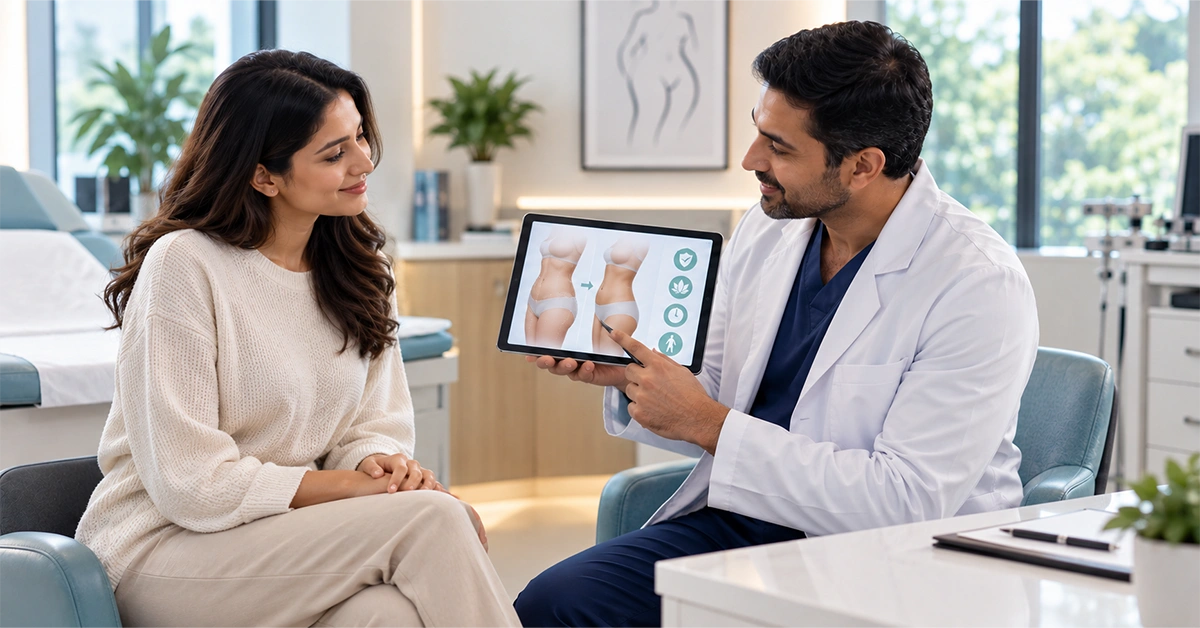
The process begins with a consultation and medical assessment rather than the surgery itself.
Your doctor may discuss your concerns, medical history, medications, previous procedures, and expectations. The areas you want treated can then be physically assessed to understand fat distribution, skin quality and body proportions.
This assessment helps determine whether liposuction alone is appropriate or whether another body contouring approach may be more suitable.
You may also receive instructions about medications, smoking, eating, alcohol and other preparations before the procedure.
A consultation is an important opportunity to discuss your goals and understand what to expect before treatment.
What Is Liposuction Recovery Like?
Recovery varies depending on the treatment areas, amount of fat removed, surgical technique and individual healing.
Swelling, bruising, soreness and tightness are common during the early stages. Your surgeon may recommend a compression garment to help manage swelling and support the treated areas.
Your return to work and normal activities will depend partly on the nature of your procedure and your occupation. Someone with a desk based job may have different recovery requirements from someone whose work involves physical activity or heavy lifting.
For more information, read our guide on how soon you can return to work after liposuction.
Strenuous exercise should generally be avoided until your surgeon confirms that it is safe to resume. The final result may also take time to become visible as swelling gradually settles.
How Can You Reduce the Risk of Liposuction Complications?
Your role in the recovery process is important. Following your surgeon’s instructions can help support healing and reduce avoidable risks.
After surgery, you may be advised to:
- Take prescribed medications as directed
- Follow wound-care instructions
- Wear compression garments when recommended
- Avoid strenuous activities during the advised recovery period
- Attend follow-up appointments
- Report unusual or worsening symptoms promptly
Severe or increasing pain, significant swelling, fever, unusual drainage, breathing difficulties, or other concerning symptoms should be reported to your medical team.
Who Is a Good Candidate for Liposuction?
Liposuction may be appropriate for adults who are generally healthy, have a relatively stable weight, and have localised areas of excess fat that have not responded sufficiently to lifestyle changes.
Realistic expectations are also important. Liposuction can improve specific body contours, but it cannot guarantee a particular body shape or replace healthy weight management.
Skin elasticity may also influence the outcome. If significant loose skin is present, removing fat alone may not produce the desired contour.
A personalised assessment is therefore necessary before deciding whether liposuction is right for you.
Are Liposuction Results Permanent?
The fat cells removed during liposuction do not grow back. However, the remaining fat cells can increase in size if you gain weight after the procedure.
Maintaining a stable weight and healthy lifestyle can help you preserve the results. This is why liposuction should be viewed as a body contouring procedure rather than a substitute for long-term weight management.
How Much Fat Can Be Removed During Liposuction?
The amount of fat that can be removed safely varies from person to person. It depends on factors such as overall health, treatment areas, surgical plan and the extent of body contouring required.
For more information, see our guide on how much fat can be removed during liposuction .
Which Liposuction Technique May Be Suitable?
Different liposuction techniques may be considered depending on the patient’s anatomy, treatment goals, fat distribution and other individual factors.
For patients researching different options, our comparison of VASER liposuction vs normal liposuction provides more information about how these approaches differ.
Expert Insights
At Medlounges, understanding whether liposuction is safe should begin with understanding whether the procedure is appropriate for you as an individual.
The plan of care also depends on your health, anatomy, fat distribution, skin quality, expectations, and recovery requirements. The aim of a consultation is not only to determine where fat can be removed, but also what approach can give a safe and realistic result.
Conclusion
So, is liposuction safe? If you are the right candidate and in good health, it can be a safe and effective way to improve specific areas of body contour when performed by a qualified and experienced aesthetic physician with adequate planning and aftercare.
Understanding the liposuction benefits, liposuction risks, liposuction complications, and recovery process will help you decide with realistic expectations. As every patient’s anatomy and medical situation is unique, suitability should always be assessed on an individual basis.
The First Step to Your Consultation
The first step is a personalised liposuction consultation. This allows your concerns, medical history, body contours, expectations, and treatment goals to be evaluated before a treatment plan is recommended.
Ready to understand whether liposuction is right for you? Book your consultation at Medlounges, Kochi / Thiruvalla today.
Medical Disclaimer: This article is for informational purposes only and does not constitute medical advice. Readers should consult a qualified cosmetic physician or plastic surgeon before undergoing liposuction or any surgical body contouring procedure.
Frequently Asked Questions
Is liposuction safe?
Liposuction is generally safe when performed on suitable patients by a qualified medical professional in an appropriate clinical setting. Like any surgical procedure, it has potential risks, including infection, bleeding, swelling, changes in sensation, contour irregularities, blood clots, and anesthesia-related complications. A proper consultation helps determine whether liposuction is appropriate for you.
- Individual health conditions and medications can affect safety.
- Risks vary depending on the treatment area and amount of fat removed.
- Following pre- and post-procedure instructions can support safer recovery.
What are the risks of liposuction?
Common liposuction risks include swelling, bruising, temporary numbness, infection, bleeding, and uneven contours. More serious complications are uncommon but can occur, particularly when multiple procedures are combined or large amounts of fat are removed. Your medical history and treatment plan should be reviewed before undergoing liposuction.
- Swelling and bruising are common during early recovery.
- Temporary changes in skin sensation may occur.
- Seek medical attention for severe pain, breathing difficulties, or unusual swelling.
How long does it take to recover from liposuction?
Liposuction recovery usually takes several weeks, although complete swelling reduction and final results can take a few months. Most patients experience swelling and bruising initially and gradually return to normal activities according to their healthcare provider’s advice.
- Compression garments may be recommended during recovery.
- Light activity is generally resumed before strenuous exercise.
- Final body contours become clearer as swelling decreases.
Does liposuction permanently remove fat?
Liposuction permanently removes fat cells from the treated area, but it does not prevent future weight gain. Remaining fat cells can enlarge if you gain weight, potentially affecting your overall body contour. Maintaining a stable weight through balanced nutrition and regular physical activity can help preserve the results.
- Liposuction is a body-contouring procedure, not a weight-loss treatment.
- Results are best maintained with a stable body weight.
- Fat can accumulate in other areas after significant weight gain.
Who is a good candidate for liposuction?
A good liposuction candidate is generally a healthy adult with localized fat deposits that have not responded adequately to diet and exercise. Suitability depends on factors such as overall health, skin elasticity, treatment goals, and expectations. A professional consultation is necessary to determine whether liposuction is appropriate.
- Liposuction is intended for body contouring rather than obesity treatment.
- Good skin elasticity can contribute to smoother results.
- Individual risks and expected outcomes should be discussed during consultation.