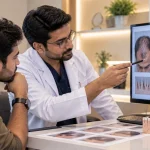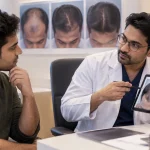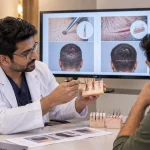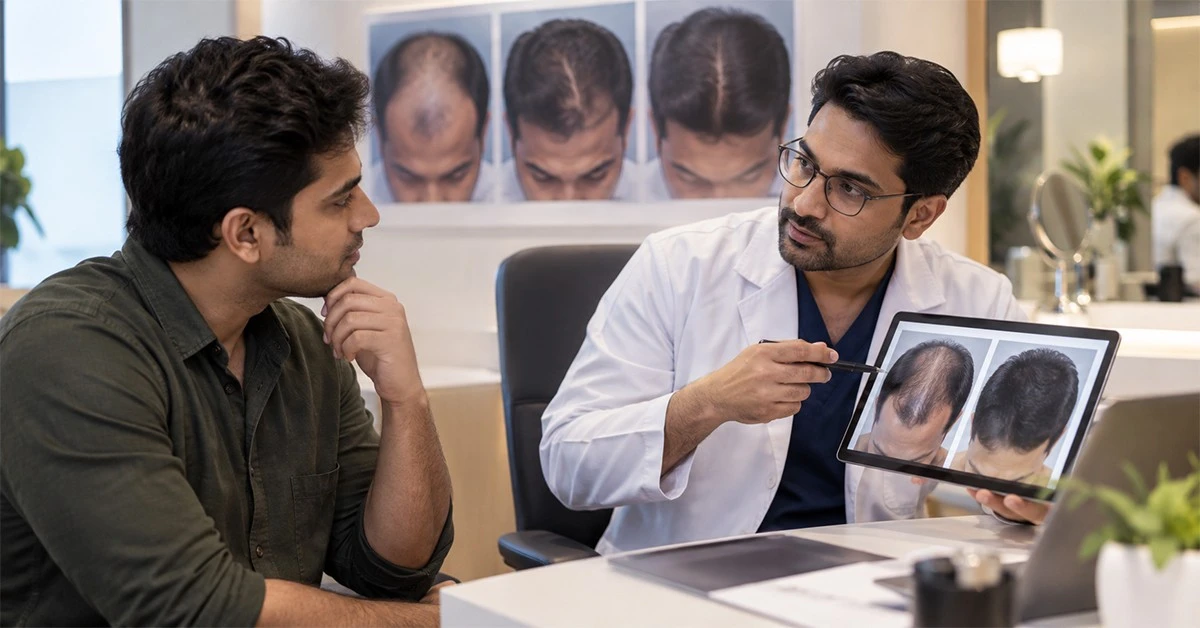
A hair transplant for a receding hairline requires more than simply filling areas where hair has been lost. The hairline frames the face, so its position, shape, density, and direction have a major influence on how natural the final result looks. At Medlounges, hairline restoration begins with understanding the pattern of hair loss, assessing the donor area, and planning a hairline that suits the patient’s facial structure rather than following a standard template.
Male pattern hair loss is commonly influenced by genetics, age, and hormones. A receding hairline can develop slowly. Some patients see recession at the temples, while others notice a more general change in the frontal hairline. The most appropriate treatment depends on how much hair has been lost, whether the recession is still progressing, and how much suitable donor hair is available.
Why the Hairline Requires Careful Planning
One of the most visible areas of a hair transplant is the frontal hairline. Small changes in placement or direction can affect the natural appearance of the result, whereas changes in areas further back on the scalp may be less noticeable.
A well-planned hairline should generally avoid an overly straight or artificial appearance. Its position needs to work with the patient’s facial proportions, age, existing hair, and expected future hair loss.
This is why hairline restoration is not simply about transplanting as many grafts as possible into the front of the scalp. The goal is to create an appropriate transition from the forehead to the existing hair.
You can learn more about hair transplantation at Medlounges and the factors involved in planning a suitable treatment.
How a Receding Hairline Is Assessed
Before recommending treatment, the surgeon evaluates several factors.
Pattern of Hair Loss
The degree and pattern of recession help determine whether transplantation is appropriate. A patient with mild temple recession may require a very different plan from someone with significant frontal loss.
Donor Hair Quality
Hair follicles are generally taken from areas of the scalp that are more resistant to pattern hair loss. The density, quality, and available number of donor grafts influence how much restoration can be planned.
Existing Hair and Future Hair Loss
A patient’s current hairline does not always represent the final pattern of hair loss. If recession is still progressing, restoring the hairline without considering future changes can produce an uneven result later.
Facial Proportions
The hairline should complement the patient’s face. A hairline designed for one facial structure may not look appropriate on another patient.
What Happens During Hairline Restoration?
During a hair transplant, healthy follicles are extracted from the donor area and strategically placed into areas affected by hair loss.
For the frontal hairline, graft placement requires particular attention to:
- Hairline position
- Graft distribution
- Natural irregularity
- Hair direction and angle
- Transition between single-hair grafts and greater density behind the hairline
- Available donor supply
The frontal edge often requires finer grafts to create a softer transition. Denser graft placement can then be planned behind this area where appropriate.
This combination helps avoid the “plugged” look that can happen with poor hair transplant planning.
Why Hair Direction Matters
Restoring the number of hairs alone is not enough. Existing hair naturally grows at specific angles and directions, and transplanted follicles need to be positioned accordingly.
At the hairline, incorrect angles can make individual grafts appear obvious even when sufficient density has been achieved.
For this reason, hairline restoration involves detailed attention to the direction, angle, and placement of individual grafts.
For patients researching the procedure, our guide to FUE hair transplant in Kerala explains how individual follicular units are extracted and transplanted.
Can a Receding Hairline Be Fully Restored?
Not every receding hairline can or should be restored to its original position.
The achievable result depends on factors such as:
- Extent of hair loss
- Donor hair availability
- Hair calibre and characteristics
- Age and pattern of hair loss
- Future progression
- Number of grafts required
- Patient expectations
A clinically appropriate hairline may therefore be slightly higher than the hairline a patient had during their teenage years.
The objective is not necessarily to recreate the youngest possible hairline. It is to create a natural, sustainable hairline that remains appropriate as the patient ages.
How Medlounges Approaches Hairline Restoration
At Medlounges, receding hairline treatment is planned around the individual patient rather than a fixed graft number or predetermined hairline shape.
The consultation begins with an assessment of the scalp, donor area, pattern of hair loss, and existing hair. The surgeon then discusses what can realistically be achieved and whether transplantation is appropriate at the current stage.
Concerns about future hair loss are factored into the planning process. This helps reduce the risk of a situation where the transplanted hairline remains in place while the natural hair behind it continues to recede.
Patients are also told what to expect in terms of growth and healing. There is no instant final density with a hair transplant. Transplanted follicles require time to shed and enter a new growth phase.
If you are unsure whether transplantation is right for you, read our guide on who is a good candidate for a hair transplant.
What Does Recovery Look Like After Hairline Restoration?
During the first few weeks of healing, you may notice temporary redness, swelling, crusting, or tenderness around the treated areas. Patients receive postoperative instructions on how to protect the new grafts carefully.
It is also common for transplanted hairs to shed after the initial healing phase. This does not necessarily mean that the follicles have been lost. The follicles can remain beneath the skin and produce new hair later.
Visible growth develops gradually over the following months, with further improvement as the transplanted hairs mature.
For a more detailed explanation of the stages of healing and growth, read our hair transplant recovery timeline.
For additional information about the procedure, risks, and recovery, consult the NHS guide to hair transplants.
Why Expectations Matter in Hairline Restoration
A natural-looking hair transplant is not defined only by density. Sometimes patients want the lowest possible hairline or the most grafts possible. However, aggressive lowering of the hairline can consume a large amount of donor hair and may not be appropriate if further hair loss occurs.
A well-planned restoration balances appearance today with the patient’s likely long-term hair pattern.
Patients should discuss the expected density, limitations of donor hair, possible future treatment needs, and the time required for results to develop before deciding on surgery.
Expert Insights
A receding hairline is one of the areas where surgical planning has a particularly visible impact on the final result. The most appropriate hairline is not necessarily the lowest hairline that can be created.
Before developing the restoration plan, the team at Medlounges assesses the patient’s facial proportions, donor capacity, existing hair loss, and long-term expectations. The objective is to create a hairline that blends with the patient’s own hair rather than appearing like a separate construction.
Conclusion
A hair transplant for a receding hairline is a process that depends on careful planning. The result is influenced by hairline position, graft selection, density, direction, donor management, and the likely future pattern of hair loss.
At Medlounges, the emphasis is on creating a hairline that looks appropriate for the individual patient and remains sustainable over time. A professional consultation allows the surgeon to determine whether restoration is suitable and what level of improvement can realistically be achieved.
The First Step to Your Consultation
If you are considering hairline restoration or looking for a long-term solution for a receding hairline, the right starting point is a professional assessment.
Ready to take the first step? Book your consultation at Medlounges Kochi or Thiruvalla to discuss your hair restoration options.
Medical Disclaimer: This article is for educational purposes only and is not a substitute for medical advice, diagnosis, or treatment. Hair transplant suitability, risks, recovery, and results vary from person to person. Consult a qualified medical professional before deciding on hair transplantation.
Frequently Asked Questions
Is a hair transplant suitable for a receding hairline?
It can be suitable, depending on the cause and extent of hair loss, donor hair availability, and whether the pattern of loss can be assessed sufficiently to plan treatment. A professional consultation is necessary to determine suitability.
Can a hair transplant restore my original hairline?
Not always. The surgeon may suggest a slightly higher hairline or a different shape to achieve a result that looks natural and remains appropriate as the patient ages.
How many grafts are needed for a receding hairline?
There is no standard number. Graft requirements depend on the size of the area, desired density, donor availability, and individual hair characteristics.
Will the transplanted hairline look natural?
The natural appearance depends on graft selection, placement, direction, angle, distribution, and the overall surgical plan. Individual results can vary.
Can my hairline continue to recede after a transplant?
Yes. Transplanted follicles may remain stable, but existing non-transplanted hair can continue to thin depending on the underlying pattern of hair loss. Long-term planning is important.