There’s a bit of frustration in doing all the right things and still not getting the result you’re working towards. Training is uniform. The diet is decided. Body fat percentage is good. And all the definitions that should be there just aren’t there.”
Many people researching their options also get confused as to the difference between HD liposuction and traditional liposuction. They sound alike – both are referred to as fat removal procedures. But the goals and the techniques and the results are substantially different. It is knowing that difference that makes the decision truly informed.”
In this article I will walk you through what HD liposuction procedure actually involves, how it works surgically, what technologies are used, what is the process, and what does recovery and results look like realistically.
What makes HD Liposuction Unique?
Liposuction in the normal sense takes fat away. It consists of HD liposuction. That difference sounds simple but it’s a different surgical philosophy, a fundamental one.
The goal of traditional liposuction is volume reduction. The High definition liposuction technique is the process of the surgeon working with anatomical precision to selectively remove fat from deep and superficial layers while saving fat in areas that improve the appearance of underlying muscle groups.
Also read: HD Liposuction – The Six-Pack You’ve Worked For, Finally Visible
Do it right and you’ll end up with a body that doesn’t just look smaller — it looks defined. The abdominal muscles become more prominent visually. The transition at the waist is more sculpted. The chest, arms and flanks are more correctly structured underneath.
It takes a surgeon who understands the architecture of the body, how the light hits the muscular contours, where shadows help create the illusion of definition, and how the fat layer over each muscle group needs to be managed for a natural result.
How does the process really work?
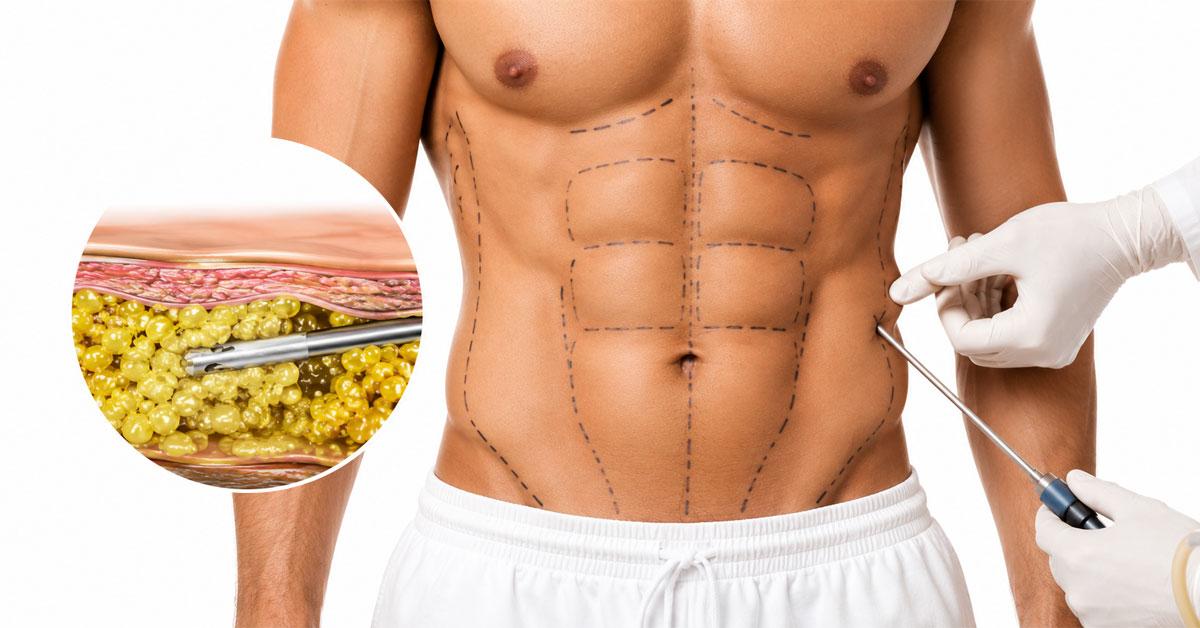
How does HD liposuction work? It begins before the cut is taken. Preoperative marking of the body is one of the most important steps. The surgeon stands by the patient and maps out the muscular anatomy of the patient, noting the natural lines, borders and contours of each muscle group. These marks will guide you through the entire sculpting process.
Once in the operating room, the process of fat emulsification begins – enabling loosening of fat cells from surrounding connective tissue prior to extraction, leading to more precise and less traumatic removal.
Then precision extraction is performed in both deep and superficial fat layers. The depth and volume are deliberately varied – more aggressive where definition is created, more conservative where the fat is preserved to maintain natural contour.
Applied Technologies
The VASER HD liposuction procedure and laser HD liposuction technique are the two most popular systems in HD body contouring. These two systems have different mechanisms.
Ultrasound assisted HD liposuction applies ultrasound energy to selectively destroy fat cells while sparing blood vessels, nerves and connective tissue. This results in more accurate sculpting of superficial fat layers and a smoother end result.
Laser HD liposuction technique uses laser energy to liquefy fat prior to removing it. It also stimulates collagen in the overlying skin providing additional support for skin tightening where mild laxity exists.
The choice of technology is dictated by anatomy, treatment areas, skin quality and the surgeon’s clinical judgement. Neither is better overall – it’s about matching the right one to the patient’s needs.
Selection of patients and surgical planning
The HD liposuction surgery procedure is best suited for patients who have a relatively stable body weight, good skin elasticity and an existing muscular foundation that can be sculpted.
Liposuction HD is not a surgery to lose weight. Patients well above their target weight will not get the same definition results as someone who is near their ideal weight but has stubborn localized fat. “An experienced surgeon will directly address this during the consultation.
Surgical Procedure Step By Step
Typical sequence for HD lipo surgery steps are:
-
- Preoperative body contour evaluation and marking
-
- Anesthesia as per extent of treatment
-
- Tumescent fluid infiltration to prepare the fat layer
-
- Assisted fat emulsification by ultrasound or laser
-
- Accurate fat removal in deep and superficial levels
-
- Refining contour after closure
Application and Monitoring of Compression Clothing for Recovery
- Refining contour after closure
HD lipo anesthesia type. If you are doing a large job that involves multiple areas of the body, you will usually need to be put under general anesthesia. More focused treatments can be performed under deep sedation or regional anaesthesia, as always decided during preoperative assessment.
How long does the procedure take?
One of the questions people ask is how long does HD lipo take. The honest answer is how many areas are treated and how complex the contouring. A single-area concentrated procedure can take between two and three hours. A full session covering the abdomen, flanks, chest and arms can be four to six hours or more.
Speed compromises the outcome, so blanket timelines are never given until the full scope of surgery is understood.
HD Lipo Vs Regular Lipo
HD lipo vs regular lipo procedure is all about intention, precision, and depth. Regular liposuction is about volume reduction, in the deep fat layer. HD liposuction is working on deep and superficial levels with a sculpting goal and not a purely reductive goal.
The level of skill, the surgical planning and the aesthetic results are significantly different – especially for patients whose main goal is visible definition rather than size reduction.
Realistic Expectations of Recovery
During the first week swelling, bruising, soreness and temporary fluid drainage are common. Consistent use of compression garments aids healing and helps skin to adapt to the new contour.
Most patients resume light activity in 1 to 2 weeks. Strenuous exercise is gradually reintroduced over four to six weeks. Final results may take 3-6 months to fully appear as swelling subsides and tissues settle.
Many patients want an immediate definition. What they see early on is a body in transition. One of the most important things a good surgeon does is to manage this expectation honestly going into surgery.
Risks and Limitations
There is no body-contouring surgery that can guarantee a perfect result. Results are dependent on anatomy, skin quality, healing response, surgeon expertise, and postoperative care. You may notice some contour irregularities and temporary asymmetry. Most of these irregularities will resolve over time, but some may require revision.
Your choice of surgeon with specific experience in HD techniques and not just general liposuction has a significant impact on safety and outcome.
Conclusion
Learning the ins and outs of the HD liposuction surgery process is one of the best things a prospective patient can do to prepare for a consultation. It sets realistic expectations and helps to separate surgeons who truly specialise in high-definition contouring from those who are applying standard liposuction principles to a procedure that requires much more precision.
Ultrasound assisted HD liposuction and advanced technologies have made meaningful body sculpting more achievable than ever — but the technology is only as good as the surgical expertise behind it.
At Medlounges, HD liposuction is performed by experienced cosmetic physicians who assess each patient individually and develop a surgical plan based on their specific anatomy, goals and realistic outcomes. Real body definition is not just a possibility but a well-planned reality with proper clinical guidance.
The First Step to Your Skin Consultation
A consultation is not just an appointment. It is a chance to learn what is really possible for your body, to ask the questions you have been carrying, and to receive a plan that is truly built around your anatomy and goals.
Ready to make the first move? Book Your Consultation Today at Medlounges, Kochi / Thiruvalla.
Medical Disclaimer: This article is provided for information only and is not a substitute for professional medical advice. Readers should see a qualified cosmetic or plastic surgeon before any surgery or body contouring procedure.
Frequently Asked Questions
What techniques are used in HD liposuction?
HD liposuction uses precise fat-removal and body-sculpting techniques to enhance natural muscle definition. The exact technique depends on the treatment area, fat distribution, skin quality, anatomy, and desired contour.
- Focuses on detailed body sculpting.
- Treatment is customized.
- Different areas require different approaches.
How does HD liposuction create muscle definition?
HD liposuction creates muscle definition by strategically removing fat around naturally occurring muscle contours. This can make underlying abdominal, chest, arm, or other muscle structures appear more visible in suitable patients.
- Targets selected fat deposits.
- Preserves important anatomical structures.
- Muscle tone influences the final appearance.
What areas can be treated with HD liposuction?
HD liposuction can be used to contour areas such as the abdomen, waist, flanks, arms, chest, back, and thighs. The areas selected depend on individual anatomy, fat distribution, and the desired body shape.
- Abdomen is a common treatment area.
- Multiple areas may sometimes be combined.
- Suitability is determined during consultation.
Is VASER used for HD liposuction?
VASER technology may be used as part of HD liposuction to assist with precise fat removal and contouring. Whether it is appropriate depends on the patient’s anatomy, treatment area, and surgeon’s assessment.
- Uses ultrasound-assisted technology.
- Can support precise fat removal.
- Not every patient requires the same technique.
How do I choose the right HD liposuction technique?
The right HD liposuction technique depends on your body composition, fat distribution, skin elasticity, muscle definition, and aesthetic goals. A qualified surgeon can assess these factors and recommend an appropriate approach.
- Treatment should be individualized.
- Medical history is considered.
- Realistic expectations are important.