Acne is one of those skin issues that gets under your skin in more ways than one. The breakouts. The red. The marks that remain long after the pimple has disappeared. They are visible enough. But the emotional toll that comes with it is rarely honestly discussed.
The pre-social event self-awareness. How some lighting makes you anxious instead of at peace. The quiet exhaustion of trying product after product and waking up to the same skin.
Also read: Complete Guide to Rejuvenation Therapy for Anti-Aging and Skin Renewal
And then there is Scroll. Before-and-after photos of people who appear to have undergone a complete skin biology rewrite in 4 weeks with one serum.
Real acne treatment doesn’t work that way. It’s a process run by a person who knows what’s really going on under the surface.
In this article, we’ll walk through how acne works, what dermatology-based treatment really means, what realistic improvement looks like, and how to go into the journey with the right expectations.
The underlying causes of acne
Acne is caused by excess oil production, dead skin cell buildup and bacteria that clog hair follicles. The body responds with inflammation – the redness, swelling and tenderness most people will know as a breakout.
Hormonal shifts are a big factor, which is why acne is so common during adolescence, during the menstrual cycle, and during periods of significant stress or lifestyle change. Genetics and hormonal imbalance also play a part in how the skin responds. Some people are just more prone to overproduction of oil or more severe inflammatory responses.
Why does this context matter? Because it helps us understand why surface-level fixes often don’t yield lasting results. But if you have a consistent routine and the breakouts are still coming back, then you need to get to the root cause of the acne.
Read More: Complete Guide to Wart Cauterization Treatment for Smooth Skin
What Can Make Acne Worse?
Several things consistently make acne worse, and many are things people do without realizing the impact:
- Hormonal changes due to stress, cycle changes or medications
- Usually, genetics is not poor hygiene. Too much oil
- Picking at or squeezing a pimple pushes the inflammation further into the skin and raises the chances of scarring
- Disrupted skin care routines that throw the skin’s natural balance out of whack
- Heavy products or pore-clogging products are used on active breakouts
- Sleep deprivation and chronic stress increase cortisol and worsen inflammation
Before any treatment is recommended, a dermatologist’s first assessment involves determining which of these factors matter most to each individual.
Active Acne, Marks and Scars – Understand the Difference
These three problems are often considered together, but they are clinically distinct and require different treatments.
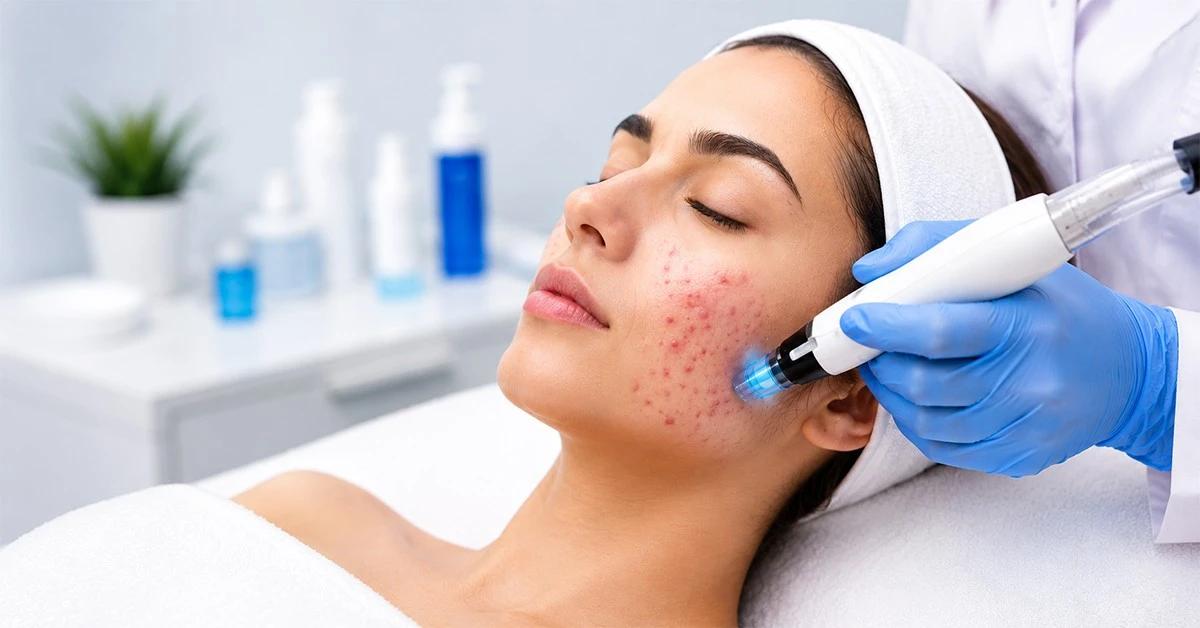
Active acne is the current breakouts – inflamed, congested or cystic lesions that are still forming. At this stage, the pimple treatment aims to reduce inflammation, control bacterial activity, and prevent the development of new lesions.
Acne mark treatment is for the flat, discoloured patches left after a breakout has gone away. These are not actual scars but rather marks left by an injury, and can fade over time with proper topical support and diligent sun protection.
Acne scar treatment is a different story. TRUE acne scars are those that alter the structure of the skin: pitted, rolling or boxcar scars that involve the deeper layers of the dermis. They require a clinical approach and often multiple treatments to achieve a meaningful improvement.
What Acne Treatment Is All About
When a dermatologist approaches acne for clear skin treatment, it’s not just about prescribing a product. They assess skin type, acne severity and pattern of scarring, tendency to pigmentation, history of hormones and lifestyle – before developing a treatment plan.
For active acne, medications such as retinoids, antimicrobials, or azelaic acid formulas can be used, with oral treatments for more widespread acne removal treatment. They work by regulating oil production, reducing bacterial actions, and normalizing skin cell turnover.
Skin rejuvenation treatment approaches are best for post-acne concerns. Surface pigmentation and irregular texture are treated with chemical peels. Microneedling results in collagen remodelling, leading to gradual improvements in smoother skin texture and reduced small scarring.
Laser procedures treat pigmentation and deeper structural changes – especially important where acne scar treatment for smooth skin requires more intensive intervention… The right combination depends entirely on the individual’s skin needs.
Dermatology skin care is also very important in any of these treatments. “Gentle cleansing, daily SPF and avoiding aggressive product combinations will protect skin when it is most vulnerable.
What Does Acne Actually Look Like Before and After?
When people search for acne before-and-after results, they tend to see the most dramatic cases. In Such cases, it looks like the skin has been totally transformed in a matter of weeks. Such cases do exist, but they are not the average experience.
The improvement is more gradual. Active breakouts can begin to decline in frequency and severity during the first few weeks of a medically guided plan. Over the next few months, the pigmentation starts to fade. Texture evens out. The skin starts to look and feel calmer.
Clear skin treatment also has varying effectiveness, depending on factors such as skin tone, the extent of scarring, hormonal levels, and compliance with the treatment regimen. Certain skin types are more prone to post-inflammatory pigmentation than others. This is especially true for deeper skin tones, where the melanin production is more reactive.
This is not a treatment failure. It is a biological fact that any good dermatologist will take into consideration from the outset.
Maintenance and Recovery
Some treatments can cause temporary skin reactions as the skin heals. You may experience some light peeling and redness after chemical peels. Laser treatments can cause temporary sensitivity and increased sun sensitivity. Microneedling can temporarily turn your skin red, which typically resolves in a day or two.
These responses are expected – not indications that something’s gone wrong. That’s what helps keep the skin healthy and ensures the results come out the way they’re supposed to, according to the aftercare plan your dermatologist gives.
Maintenance is also part of long-term acne control. For many people post acne treatment, this means a simple skincare routine, addressing hormonal factors, and returning for periodic treatments to maintain healthy, glowing skin over time.
Acne treatments are seldom a one-stop shop. This is an ongoing relationship between the patient, the skin and a dermatologist who understands both.
Conclusion
If you have been looking for an acne removal treatment that actually works and asking yourself why nothing has worked, the most probable reason is that previous methods have been treating symptoms and not causes. Real improvement in facial skin—the lasting kind—comes from a program built around your particular skin, your acne pattern, and your long-range goals.
The best acne treatment for clear skin isn’t a product or a viral skincare trend. It’s in a clinical assessment. A personalized treatment plan. And the consistency to see it through. Led by someone who understands what works across so many different skin types and severity levels.
At Medlounges, our experienced dermatologists and aesthetic physicians provide acne treatment by examining each patient individually and developing a plan tailored to the patient’s unique skin condition, acne history, and achievable goals. You don’t need to be perfect. You’ve got to get better.
Your skin consultation begins here.
A consultation is more than an appointment. It’s a chance to get to know your skin properly, ask the questions you’ve been holding back, and receive advice that’s truly tailored to your concerns—not a standard package.
Ready to start? Book your skin consultation with Medlounges Kochi/Thiruvalla today.
Medical Disclaimer: This article is for information purposes only and should not be construed as medical advice. Readers are advised to consult a qualified aesthetic physician or dermatologist before undergoing a cosmetic or dermatological procedure.
Frequently Asked Questions
What can acne treatment improve?
Acne treatment can help reduce active breakouts, inflammation, clogged pores, and the risk of new lesions. Depending on the treatment selected, it may also improve uneven skin texture and the appearance of acne-related marks.
- Helps control active acne.
- May reduce future breakouts.
- Treatment depends on acne severity.
How long does acne treatment take to show results?
Acne treatment usually requires consistent care before noticeable improvement develops. The timeline depends on acne severity, treatment type, skin response, and whether the treatment is targeting active acne, marks, or scarring.
- Results vary between individuals.
- Consistency is important.
- Severe acne may require longer treatment.
What should I expect before and after acne treatment?
Before treatment, the skin may have active breakouts, redness, clogged pores, or uneven texture. After appropriate treatment, patients may see fewer breakouts, reduced inflammation, and improved skin clarity, although results vary according to the type and severity of acne.
- Improvement is usually gradual.
- Acne scars may need separate treatment.
- Follow-up helps monitor progress.
Can acne treatment remove acne scars?
Some acne treatments can improve the appearance of acne scars, but no single treatment is suitable for every type of scar. A dermatologist can assess scar depth and skin type before recommending an appropriate treatment approach.
- Different scars require different treatments.
- Treatment may involve multiple sessions.
- Early acne management can reduce scarring risk.
How can I maintain results after acne treatment?
Maintaining acne treatment results requires consistent skincare and healthy habits. Following a dermatologist-recommended routine, using suitable products, protecting the skin from excessive sun exposure, and avoiding picking or squeezing pimples can help prevent worsening.
- Follow the prescribed skincare routine.
- Avoid picking active acne.
- Use appropriate sun protection.